My freezer used to be a graveyard of good intentions. Chicken breasts I meant to cook. Ground beef I forgot about. A bag of carrots that turned into science experiments.
Then I started using my slow cooker like it owed me money, and everything changed.
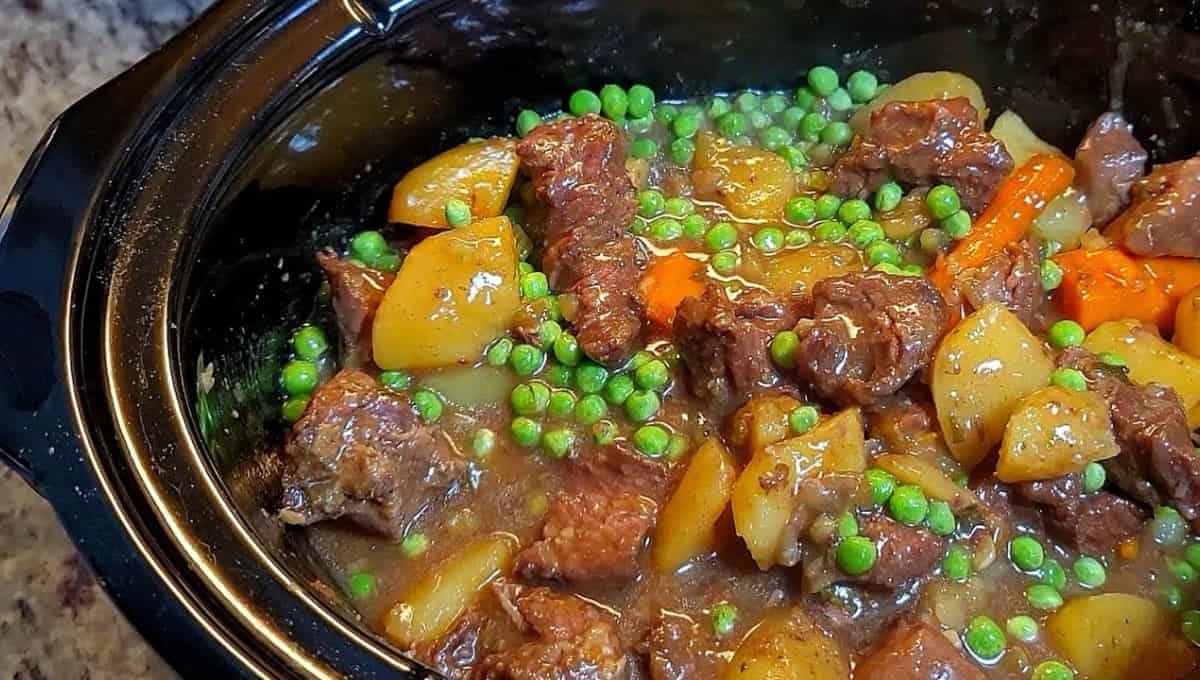
This slow cooker beef stew is the recipe that fixed my weeknight chaos. You chop, you dump, you walk away for eight hours. That’s it. No standing over a pot. No last minute grocery run.
Silas asked for seconds the first time I made this and then asked why we hadn’t been eating it every week for our entire marriage. Fair question, honestly.
What surprised me most wasn’t even the flavor. It was how little effort it actually took to get there. I chopped everything in under fifteen minutes, tossed it all in, and went about my day like a functioning adult with a plan.
Eight hours later, dinner was just… done. No pot to babysit. No sauce to stir every twenty minutes. Just a house that smelled like someone’s grandmother had been cooking all afternoon.
Side Note: If you love hands-off dinners like this one, you’ll probably like my air fryer recipes too. Same lazy-but-delicious energy.
Why This Recipe Works
Cheap cuts of beef need time and low heat to turn tender. A slow cooker gives them exactly that.
The vegetables release their juices slowly. The beef breaks down into these soft, fall-apart pieces. By the time you’re ready to eat, your kitchen smells like a restaurant and you did almost nothing.
It’s the kind of meal that makes people think you’re a better cook than you actually are. I say that with love, because I am one of those people.
There’s also something about a slow cooker meal that just feels like a hug. Maybe it’s the warmth. Maybe it’s the fact that you didn’t have to lift a finger for eight hours. Either way, this is comfort food in the truest sense, and it’s 2026 proof that easy dinners don’t have to taste like a compromise.
Read this also: Steak and Mac and Cheese: Steakhouse Magic in 35 Minutes
What You’ll Need
| Ingredient | Amount |
|---|---|
| Beef chuck roast, cut into 1.5-inch cubes | 2 lbs |
| Yellow onion, diced | 1 large |
| Carrots, sliced into coins | 4 medium |
| Yukon gold potatoes, cubed | 1.5 lbs |
| Celery stalks, sliced | 2 |
| Garlic cloves, minced | 4 |
| Beef broth | 4 cups |
| Tomato paste | 2 tbsp |
| Worcestershire sauce | 1 tbsp |
| Dried thyme | 1 tsp |
| Dried rosemary | 1 tsp |
| Bay leaves | 2 |
| Salt | 1.5 tsp, plus more to taste |
| Black pepper | 1 tsp |
| All-purpose flour | 3 tbsp |
| Frozen peas | 1 cup |
| Fresh parsley, chopped | For garnish |
Tools You’ll Need
- 6-quart slow cooker
- Cutting board and sharp knife
- Large mixing bowl
- Measuring cups and spoons
- Wooden spoon
Pro Tips
Sear the beef first if you have five extra minutes. You don’t have to. But browning the cubes in a hot pan before they go into the slow cooker adds a depth of flavor that plain simmered beef just doesn’t have.
Don’t skip the flour. Tossing the beef cubes in flour before cooking thickens the stew naturally. Skip it and you’ll end up with something closer to soup.
Cut your vegetables in similar sizes. This keeps everything cooking evenly, so you don’t end up with mushy carrots and undercooked potatoes in the same bite.
Add peas at the very end. They only need a few minutes of heat. Dump them in too early and they turn into sad, gray little balls.
Resist opening the lid. Every time you lift it, you let out heat and add cooking time. I know it’s tempting. I know the smell is incredible. Just wait.
Layer the beef on top, not the bottom. Vegetables like potatoes and carrots take longer to soften and cook best when they’re closest to the heat source at the bottom of the slow cooker.
Common Mistakes to Avoid
I’ve made every one of these mistakes so you don’t have to.
Overfilling the slow cooker. It needs room for the heat to circulate. Fill it no more than three-quarters full, or your stew will cook unevenly.
Using lean beef. A leaner cut sounds healthier, but it turns dry and stringy after hours of slow cooking. Chuck roast has just enough fat marbled through it to stay tender.
Cooking on high the whole time. It’s tempting when you’re short on time, but low and slow is what breaks down the connective tissue in the beef. High heat the entire time can leave it tough.
Adding dairy too early. If you ever adapt this recipe with cream or milk, add it at the very end. Dairy tends to curdle after hours of heat.
Read this also: Taco Bowl Meal Prep That Survives 4 Full Days
How to Make Slow Cooker Beef Stew
Step 1: Prep the Beef
Pat the beef cubes dry with a paper towel. Toss them in a bowl with the flour, salt, and pepper until evenly coated.
Step 2: Layer the Slow Cooker
Add the onion, carrots, potatoes, celery, and garlic to the bottom of your slow cooker. Place the floured beef cubes on top.
Step 3: Add the Liquid
In a separate bowl, whisk together the beef broth, tomato paste, and Worcestershire sauce. Pour this over the beef and vegetables.
Step 4: Season It
Sprinkle in the thyme and rosemary, then tuck the bay leaves into the liquid. Give everything a gentle stir so the seasoning is distributed.
Step 5: Cook Low and Slow
Cover and cook on low for 8 hours, or on high for 4 to 5 hours, until the beef is tender enough to shred with a fork.
Step 6: Finish the Stew
Stir in the frozen peas during the last 15 minutes of cooking. Remove the bay leaves before serving.
Step 7: Serve
Ladle into bowls and top with fresh parsley. Serve with crusty bread if you want to soak up every drop of that broth.
Substitutions and Variations
| Original | Substitute |
|---|---|
| Beef chuck roast | Beef stew meat, short ribs, or venison |
| Yukon gold potatoes | Red potatoes or sweet potatoes |
| Beef broth | Bone broth or a mix of broth and red wine |
| All-purpose flour | Cornstarch slurry for a gluten-free option |
| Frozen peas | Frozen green beans or corn |
Want a lower carb version? Swap the potatoes for cubed turnips or radishes. They hold up surprisingly well in the slow cooker and soak up the broth just as nicely.
For a keto friendly bowl, skip the potatoes entirely and add extra celery and mushrooms instead. The stew stays hearty without the starch.
If you’re feeding someone who avoids red meat, boneless chicken thighs work in this same recipe. Just reduce the cooking time to 5 to 6 hours on low, since chicken cooks faster than beef.
Need this dairy free? Good news, it already is. No cream, no butter, nothing to swap out.
Make Ahead Tips
You can prep everything the night before. Chop your vegetables and beef, store them in separate containers in the fridge, and dump it all into the slow cooker in the morning.
This stew also freezes beautifully. Cool it completely, then portion it into freezer-safe bags. It keeps well for up to 3 months.
Nutritional Snapshot
| Nutrient | Per Serving (approx.) |
|---|---|
| Calories | 380 |
| Protein | 28g |
| Carbohydrates | 32g |
| Fat | 14g |
| Fiber | 4g |
This is based on a 6-serving batch and can vary depending on the cut of beef and exact vegetables you use.
Meal Pairings
- Warm, buttered crusty bread for dipping
- A simple green salad with vinaigrette
- Garlic butter dinner rolls
- A glass of dry red wine, if that’s your thing
- Mashed cauliflower for a lighter, low-carb side
Any of these turn this stew from a casual weeknight dinner into something you’d happily serve to guests.
Leftovers and Storage
Store leftovers in an airtight container in the fridge for up to 4 days. Honestly, this stew tastes even better on day two once the flavors have had time to settle in.
To reheat, warm it on the stove over medium-low heat, stirring occasionally. You can also microwave individual portions in 1-minute bursts.
To freeze, let the stew cool completely first. Store in freezer bags or airtight containers for up to 3 months. Thaw overnight in the fridge before reheating.
Cooking Time Efficiency Tips
Chop double the vegetables next time you’re already at it and freeze the extra portion. Future you will be thrilled to skip the cutting board entirely.
A programmable slow cooker with a “keep warm” setting means you can start this before work and not worry about it overcooking by the time you get home.
FAQs Related to slow cooker beef stew
1. Can I cook this on high instead of low?
Yes. Cooking on high for 4 to 5 hours works well if you’re short on time, though low and slow tends to give more tender beef.
2. Why is my stew watery?
This usually happens when the beef isn’t coated in flour before cooking, or when too much liquid is added. Stick to the amounts listed and don’t skip the flour step.
3. Can I add wine to this recipe?
Definitely. Replace up to 1 cup of the beef broth with a dry red wine like cabernet sauvignon for extra depth.
4. Do I need to brown the beef first?
No, but it does add flavor. If you’re short on time, you can skip this step and the stew will still turn out great.
5. Can I make this in an Instant Pot instead?
Yes. Use the pressure cook setting on high for 35 minutes, then let the pressure release naturally for 10 minutes before opening.
6. What’s the best cut of beef for stew?
Chuck roast is the gold standard. It has enough fat and connective tissue to turn tender after hours of slow cooking, which leaner cuts just can’t match.
7. an I double this recipe?
Yes, as long as your slow cooker is large enough to hold everything without going over three-quarters full. A 7 or 8-quart slow cooker works well for a doubled batch.
8. How do I thicken the stew if it’s too thin?
Mix a tablespoon of cornstarch with two tablespoons of cold water, then stir it into the stew during the last 30 minutes of cooking. It’ll thicken up as it continues to cook.
Wrapping Up
This slow cooker beef stew has become one of those recipes I make on repeat, especially once the weather turns cold and all I want is something warm and hearty waiting for me at the end of the day.
It’s simple, it’s forgiving, and it makes your whole house smell incredible for hours.
If you try this recipe, I’d love to hear how it turned out. Drop a comment below and let me know what you paired it with, or if you tried any of the substitutions. And if you have questions before you get started, ask away. I check the comments regularly and I’m happy to help.