
I’ll be honest with you. The first time Silas suggested I put cottage cheese in bread, I made a face. A whole face. Like he’d asked me to put ranch dressing in my coffee.
But I made it anyway, because that’s what four years of marriage and a shared love of weird kitchen experiments will do to you. And within one bite, I was a completely different person.
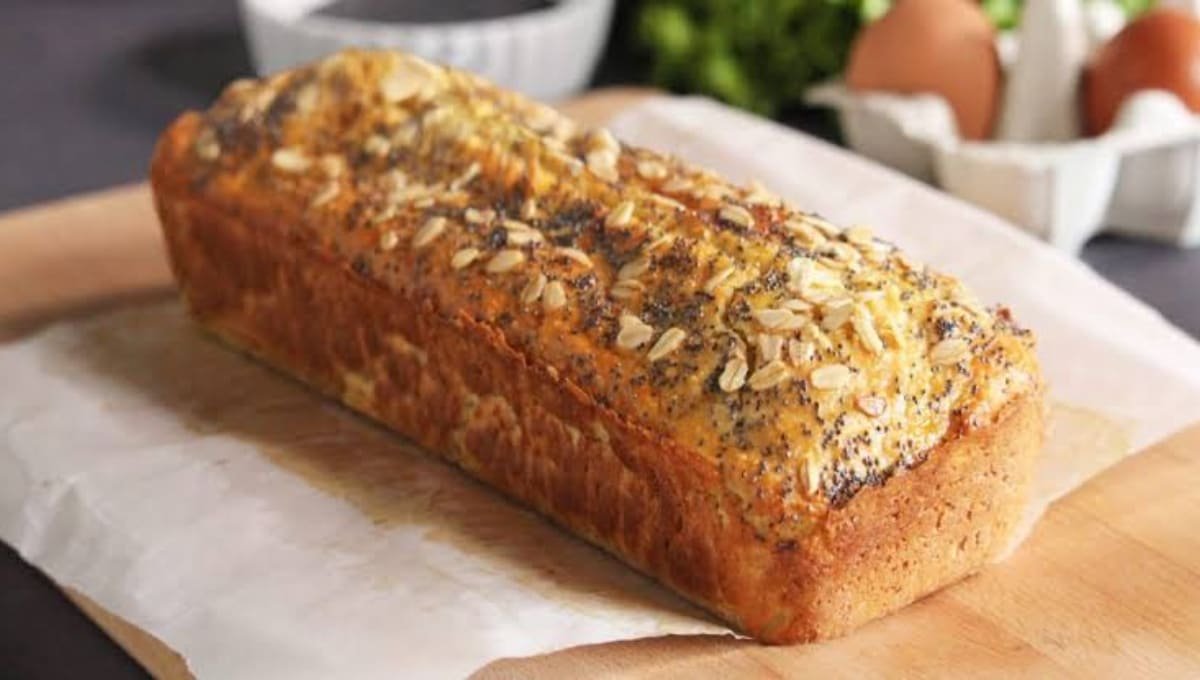
This cottage cheese bread is soft, slightly tangy, and packed with protein in a way that regular bread just can’t compete with. It slices beautifully. It toasts up golden. And it doesn’t taste like cottage cheese at all, which is honestly the whole point.
If you’ve been seeing this bread all over your feed lately, there’s a reason. It’s not a trend for nothing.
Side Note: Cottage cheese has quietly become one of the most searched high protein ingredients this year, and once you taste what it does to baked bread, you’ll get why.
Why Cottage Cheese Bread Actually Works
Cottage cheese sounds like a strange bread ingredient until you understand what it’s doing behind the scenes.
It adds moisture without adding a bunch of extra oil or butter. It brings in a solid dose of protein and calcium. And when it blends into the batter, it disappears completely, leaving behind this soft, almost brioche-like crumb.
I’ve made a lot of protein bread recipes that taste like cardboard with extra steps. This one doesn’t.
It’s dense enough to hold up to a thick spread of butter, but light enough that you won’t feel like you swallowed a brick afterward.
Read this also: Secret 2-Point Fajita Bowl Silas Can’t Stop Asking For!
What You’ll Need
Here’s everything going into this loaf.
| Ingredient | Amount |
|---|---|
| Full-fat cottage cheese | 2 cups |
| Large eggs | 4 |
| All-purpose flour | 2 cups |
| Baking powder | 1 tablespoon |
| Salt | 1 teaspoon |
| Honey or sugar | 1 tablespoon |
| Olive oil | 2 tablespoons |
| Garlic powder (optional) | 1 teaspoon |
| Shredded cheddar or parmesan (optional) | 1/2 cup |
Side Note: Small curd cottage cheese blends smoother and faster than large curd, so grab that if your store has it. Either works, but small curd saves you a little blending time.
Tools You’ll Need
- Blender or food processor
- Large mixing bowl
- Loaf pan (9×5 inch works great)
- Parchment paper
- Rubber spatula
- Wire cooling rack
Pro Tips From My Kitchen
I’ve made this bread more times than I can count at this point, so here’s what actually makes a difference.
Blend the cottage cheese completely smooth. If you skip this step, you’ll end up with little white curds throughout your loaf. Not the end of the world, but the texture is so much better when it’s silky.
Don’t overmix once the flour goes in. Overmixed batter makes for a tougher, denser loaf. Stir just until the flour disappears and stop there.
Let it cool before slicing. I know, I know. The smell coming out of your oven will be borderline unbearable. But cutting into it too early makes the inside gummy instead of soft.
Use room temperature eggs. Cold eggs straight from the fridge can make the batter seize up a little when mixed with the blended cottage cheese. Room temp blends smoother.
Add mix-ins after blending, not before. If you’re doing the cheese or garlic version, fold those in at the very end so they stay evenly distributed instead of sinking to the bottom.
How to Make Cottage Cheese Bread
Step 1: Preheat and Prep
Preheat your oven to 350°F. Line your loaf pan with parchment paper, leaving a little overhang on the sides so you can lift the bread out easily later.
Step 2: Blend the Cottage Cheese
Add your cottage cheese to a blender or food processor. Blend on high until it’s completely smooth with no visible curds left. This usually takes about 60 to 90 seconds.
Step 3: Add the Wet Ingredients
Add the eggs, olive oil, and honey directly into the blender with the smooth cottage cheese. Blend again until everything is fully combined and slightly frothy.
Step 4: Mix the Dry Ingredients
In your large mixing bowl, whisk together the flour, baking powder, salt, and garlic powder if you’re using it.
Step 5: Combine
Pour the wet mixture into the bowl with the dry ingredients. Use your spatula to fold everything together gently. Stop mixing as soon as you no longer see streaks of flour.
If you’re adding shredded cheese, fold it in now.
Step 6: Bake
Pour the batter into your prepared loaf pan and smooth the top with your spatula. Bake for 40 to 45 minutes, or until a toothpick inserted in the center comes out clean and the top is golden brown.
Step 7: Cool
Let the bread cool in the pan for 10 minutes, then use the parchment overhang to lift it onto a wire rack. Let it cool for at least 30 more minutes before slicing.
I know that last part feels impossible. Do it anyway.
Read this also: Taco Lasagna: The Easy Layered Dinner Everyone Wants
Substitutions and Variations
This recipe is genuinely flexible, so here’s how to make it your own.
Gluten-free version: Swap the all-purpose flour for a 1:1 gluten-free baking blend. The texture stays soft, though it may turn out slightly more crumbly.
Dairy-free version: Use a dairy-free cottage cheese alternative and skip the shredded cheese mix-in.
Sweet version: Add 1/2 cup blueberries or a teaspoon of cinnamon for a breakfast-friendly loaf.
Savory version: Fold in chopped chives, jalapeños, or sun-dried tomatoes along with the cheddar for a savory twist that pairs beautifully with soup.
Lower carb version: Replace half the flour with almond flour, though you’ll want to add an extra egg to help with binding.
Make Ahead Tips
This bread actually improves slightly the next day once the flavors settle, so it’s a great one to make ahead.
You can mix the batter up to a few hours in advance and store it covered in the fridge before baking, though I’d recommend letting it sit at room temp for 15 minutes before it goes into the oven.
The fully baked loaf also freezes wonderfully, which I get into more below.
Storage and Leftovers
Store this bread in an airtight container in the fridge for up to 5 days. Because of the cottage cheese, it needs refrigeration, unlike traditional bread that can sit on the counter.
To freeze it, slice the loaf first, then separate the slices with parchment paper before placing them in a freezer bag. This way you can pull out exactly what you need instead of thawing the whole thing.
It reheats beautifully in the toaster straight from frozen. No thawing required.
Nutritional Snapshot
Here’s roughly what you’re looking at per slice, based on a loaf cut into 10 slices.
| Nutrient | Amount |
|---|---|
| Calories | ~140 |
| Protein | ~9g |
| Carbs | ~14g |
| Fat | ~5g |
Compared to a standard slice of white bread sitting around 2 to 3 grams of protein, this loaf is doing some serious heavy lifting.
Meal Pairing Ideas
This bread works in more places than you’d expect.
- Toasted with butter and a drizzle of honey for breakfast
- Sliced thick for a hearty grilled cheese
- Alongside a bowl of soup or chili
- As the base for an open faced sandwich topped with avocado and a fried egg
- Cubed and toasted into croutons for a protein-packed salad topping
Cooking Time Efficiency Tips
If you want this bread on the table faster, here’s how to shave off some time.
Blend your cottage cheese the night before and store it in the fridge in an airtight container. That way, in the morning, you’re just whisking dry ingredients and combining, which cuts your active time down to about 10 minutes.
You can also double the recipe and bake two loaves at once if your oven has the space. Freeze one and keep one out. Future you will be thrilled.
Room temperature eggs are worth planning ahead for too. Pull them out of the fridge when you start preheating the oven, and they’ll be ready to go by the time you need them.
FAQs Related to Cottage cheese Bread
1. Can I taste the cottage cheese in this bread?
No. Once it’s blended smooth and baked, the flavor mellows into something mild and slightly tangy, similar to a light sourdough. You won’t taste “cottage cheese” specifically.
2. Why did my bread turn out dense?
This usually happens from overmixing the batter or using cold eggs straight from the fridge. Room temperature ingredients and gentle mixing make a big difference.
3. Can I make this without a blender?
You can mash the cottage cheese with a fork or whisk it vigorously, but you’ll end up with small curds throughout the bread. It still tastes great, just a slightly different texture.
4. Is this bread keto friendly?
Not in its original form, since it uses regular flour. Swapping in almond flour gets you closer, though you’ll need to adjust the ratios slightly.
5. How long does it actually last?
Up to 5 days in the fridge in an airtight container, or up to 3 months in the freezer once sliced.
Wrapping Up
If you’ve made it this far, you owe it to yourself to actually make this bread. It takes less than an hour, uses ingredients you probably already have, and the payoff is a loaf that tastes like you spent way more effort than you actually did.
I still make this on repeat, and Silas has fully come around from the skeptic he was on day one.
Try it out this week and let me know how it goes in the comments below. I’d love to hear what mix-ins you tried, or if you ran into any questions along the way.