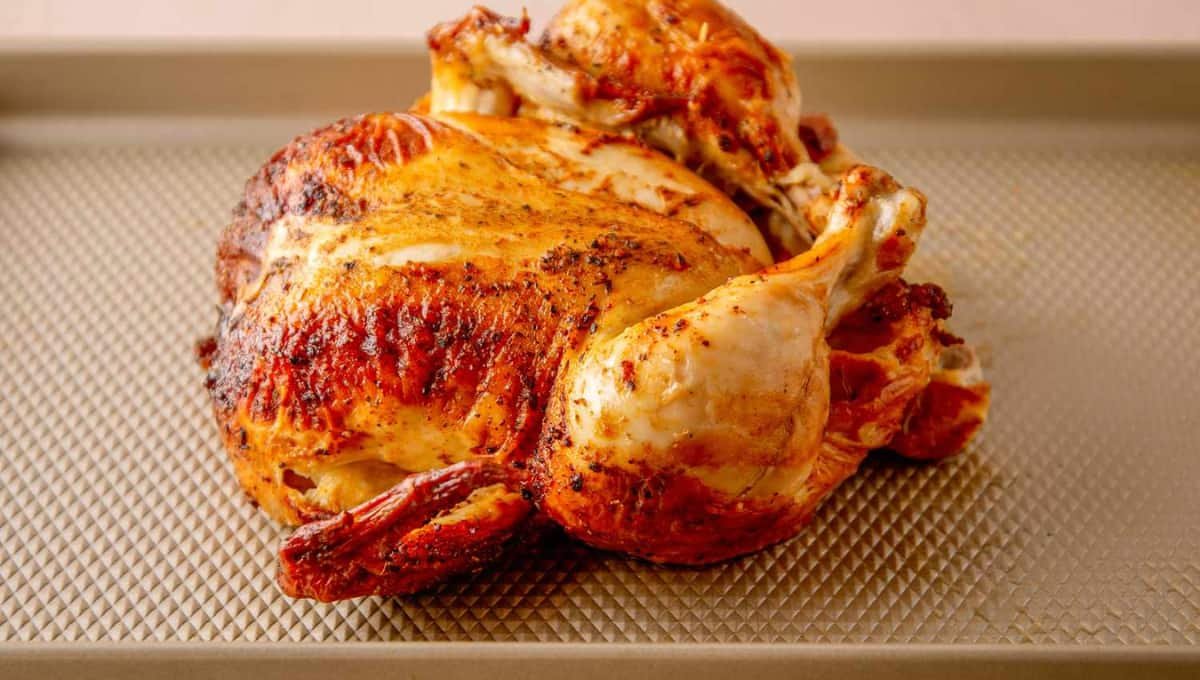
My neighbor showed up at my door last Sunday just to ask what I was cooking. That’s the power of a whole roasted chicken done right. The smell alone does half the marketing for you.
I used to think roasting a whole chicken was one of those “advanced home cook” things. Like something only my mother-in-law could pull off.
Turns out it’s actually one of the easiest dinners you can make. Less effort than a stir fry, honestly.
And once you get the basic method down, you’ll never look at a $12 grocery store rotisserie chicken the same way again.
So let’s get into it.
What You’ll Need
Here’s everything going into this bird. Nothing fancy, nothing you can’t find at a regular grocery store.
For the chicken:
- 1 whole chicken (4 to 5 pounds)
- 3 tablespoons butter, softened
- 2 tablespoons olive oil
- 1 lemon, halved
- 1 whole head of garlic, halved crosswise
- 4 sprigs fresh thyme
- 2 sprigs fresh rosemary
- 1 small yellow onion, quartered
- 2 teaspoons kosher salt
- 1 teaspoon black pepper
- Kitchen twine (optional but helpful)
For the pan (optional, but worth it):
- 2 carrots, roughly chopped
- 2 celery stalks, roughly chopped
- 1 cup chicken broth or water
That broth in the pan is what turns into the base for a really good gravy later. Don’t skip it.
Read this also: This One-Pan Chicken Rice Casserole Fixes Bad Days
Tools You’ll Need
- A roasting pan or oven-safe skillet (cast iron works great)
- A meat thermometer (this one is non-negotiable, more on that below)
- Kitchen twine or dental floss for trussing
- A basting spoon or brush
- A sharp knife and cutting board for carving
Pro Tips From Experience
1. Dry your chicken like it owes you money. Pat it down with paper towels until it’s completely dry, inside and out. Wet skin steams instead of crisping, and nobody wants rubbery skin.
2. Salt it the night before if you can. This is called a dry brine and it’s the single biggest upgrade you can make. Salt the whole bird, put it uncovered in the fridge overnight, and the meat comes out seasoned all the way through, not just on the surface.
3. Butter under the skin, not just on top. Gently loosen the skin over the breast with your fingers and push softened butter underneath. This bastes the meat from the inside while it cooks. Small step, huge flavor payoff.
4. Thermometer over timer, every single time. Ovens lie. Chicken sizes vary. A $10 meat thermometer will save you from dry chicken forever.
5. Let it rest before you touch it. I know it smells incredible and you want to cut in immediately. Give it 15 minutes anyway. The juices redistribute and your chicken stays moist instead of running all over the cutting board.
How to Make a Whole Roasted Chicken
- Prep the chicken. Remove the giblets if there are any inside the cavity. Pat the chicken completely dry with paper towels.
- Dry brine (optional but recommended). Season the whole bird generously with the salt. Place it uncovered on a plate or tray in the fridge for at least 1 hour, or up to overnight.
- Preheat the oven to 425°F (220°C).
- Loosen the skin over the breast with your fingers and push the softened butter underneath, spreading it as evenly as you can.
- Stuff the cavity with the halved lemon, garlic head, thyme, rosemary, and a few pieces of onion.
- Truss the legs together with kitchen twine so the bird cooks evenly. This step is optional, but it does help.
- Rub the outside of the chicken with olive oil and season with black pepper (and more salt if you skipped the dry brine).
- Arrange the vegetables (carrots, celery, remaining onion) in the bottom of your roasting pan and pour in the chicken broth. Place the chicken on top, breast side up.
- Roast for 1 hour to 1 hour 20 minutes, depending on the size of your bird. Baste with the pan juices around the halfway mark.
- Check the temperature. The chicken is done when a thermometer reads 165°F in the thickest part of the breast and 175°F in the thigh.
- Rest for 15 minutes before carving. Cover loosely with foil.
- Carve and serve, spooning some of those pan juices right over the top.
Roasting Time by Weight
| Chicken Weight | Approximate Roast Time |
|---|---|
| 3 to 4 lbs | 55 to 70 minutes |
| 4 to 5 lbs | 70 to 85 minutes |
| 5 to 6 lbs | 85 to 100 minutes |
These are estimates. Your thermometer is always the real answer.
Read this also: Crispy Homemade Chicken Nuggets Kids Actually Beg For
Substitutions and Variations
- No fresh herbs? Use 1 tablespoon of dried Italian seasoning instead.
- No fresh lemon? A splash of white wine vinegar in the cavity works in a pinch.
- Want it spicier? Rub the skin with smoked paprika and cayenne before roasting.
- Dairy-free? Swap the butter for olive oil or a plant-based butter alternative.
- Lower sodium? Cut the salt in the dry brine down to 1 teaspoon and skip the extra salt before roasting.
- Want crispier skin? Skip trussing the legs. Open legs mean more skin exposed to heat.
Make Ahead Tips
You can dry brine the chicken up to 24 hours ahead. This actually improves the flavor, so it’s worth the head start.
You can also chop your vegetables and store them in the fridge a day early. Just keep them separate from the raw chicken.
A Few Extra Details
Nutrition (approximate, per serving with skin): Roughly 320 calories, 30g protein, and 21g fat per 4 ounce serving. This will shift depending on the exact size of your bird and how much skin you eat.
Meal pairing ideas:
- Roasted potatoes or mashed potatoes
- A simple green salad with vinaigrette
- Garlic bread for soaking up the pan juices
- Steamed green beans or roasted broccoli
Time efficiency tip: While the chicken roasts, that’s your window to make a side dish or clean the kitchen. It’s basically a hands-off hour and a half.
Leftovers and Storage
Store leftover chicken in an airtight container in the fridge for up to 4 days.
For longer storage, shred the meat and freeze it in a freezer bag for up to 3 months.
Don’t throw away the carcass. Simmer it with water, onion, carrot, and celery for a few hours and you’ve got homemade chicken stock for basically free.
FAQs Related to whole roasted chicken
1. Do I need to truss the chicken?
No, it’s optional. Trussing helps it cook more evenly and look neater, but the chicken will still turn out fine without it.
2. Why is my chicken skin not crispy?
The most common reason is moisture. Make sure the bird is completely dry before it goes into the oven, and avoid covering it with foil while roasting.
3. Can I cook this at a lower temperature?
Yes, 375°F works too, it just takes longer and the skin won’t get quite as crispy. Add roughly 15 to 20 extra minutes.
4. What if my chicken is browning too fast on top?
Loosely tent the breast area with foil for the remaining cook time.
5. Can I stuff the chicken with actual stuffing instead of aromatics?
You can, but it changes the cook time and food safety guidelines shift as well. Cooking the stuffing separately is the safer route.
Conclusion
A whole roasted chicken looks impressive, smells like a warm hug for your whole house, and takes about 15 minutes of actual hands-on effort.
That’s the kind of math I can get behind.
Give this one a try this week, even if it’s just a random Tuesday. Then come back and tell me how it turned out in the comments. I read every single one.
And if you have questions about swaps, timing, or anything else, drop them below too. I’m happy to help you troubleshoot.