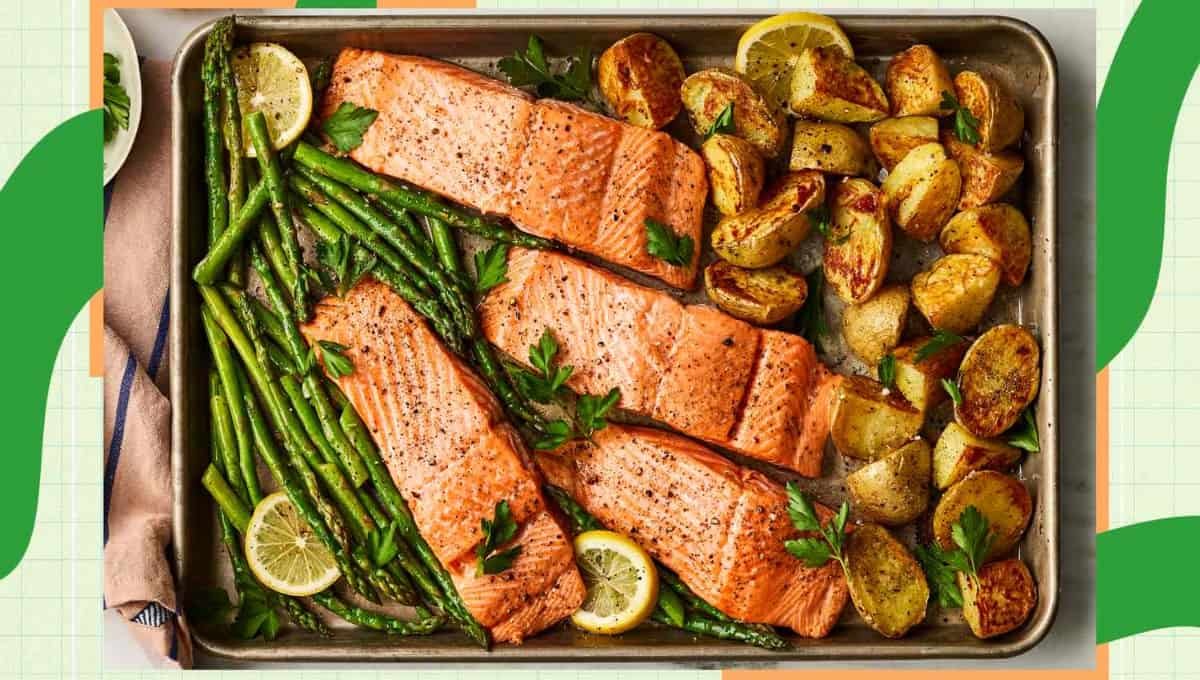
Salmon Secret Recipe: I almost didn’t order salmon that night in Lisbon. I’d had “meh” salmon so many times before that I nearly went with the steak instead.
Then the chef walked by our table, saw my hesitation, and said one thing that changed everything: “Trust the skin.”
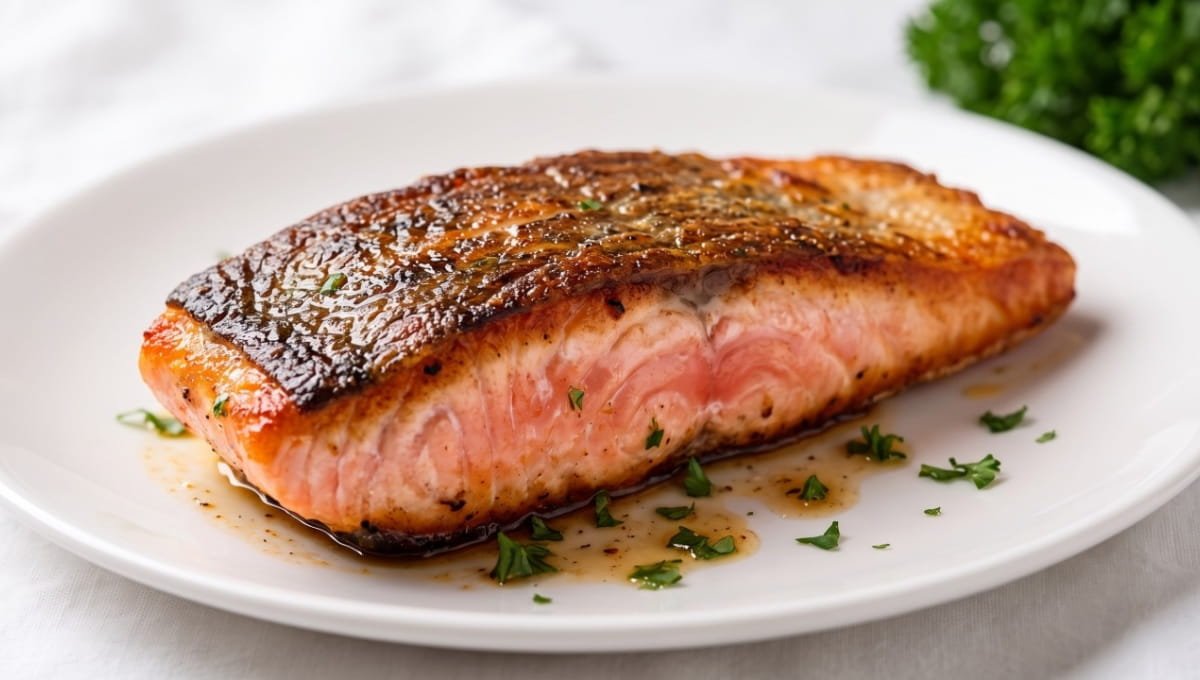
That salmon had a crust so crisp it sounded like glass when I cut into it. The inside was soft, buttery, and barely holding together.
I went home and tried to recreate it for two straight weeks.
This is the recipe I landed on. It takes 15 minutes, uses one pan, and gets that same glass-like crust every single time.
What You’ll Need
Here’s everything you’ll need to make this recipe for 4 servings:
- 4 salmon fillets (6 oz each, skin-on)
- 2 tablespoons olive oil
- 2 tablespoons unsalted butter
- 3 garlic cloves, minced
- 1 lemon (half juiced, half sliced)
- 1 teaspoon salt
- 1/2 teaspoon black pepper
- 1/2 teaspoon paprika
- 2 tablespoons fresh dill (or parsley)
That’s it. Nine ingredients, and you probably already have half of them.
Read this aslo: One-Pan Chicken Fajita Bake: The Lazy Dinner Hack Nobody Talks About
Tools You’ll Need
- A heavy stainless steel or cast iron skillet
- A fish spatula (a regular one works, but this makes flipping way easier)
- Paper towels
- A meat thermometer (optional, but it saves you from guessing)
How to Make It
- Pat the salmon completely dry with paper towels. This step matters more than any other one on this list.
- Season both sides with salt, pepper, and paprika.
- Heat the olive oil in your skillet over medium-high heat until it shimmers.
- Place the salmon skin-side down and press it flat with your spatula for the first 10 seconds.
- Let it cook undisturbed for 5 to 6 minutes. Don’t touch it. Don’t peek under it. Just let it sit.
- Flip the salmon and add the butter, garlic, and lemon slices to the pan.
- Tilt the pan slightly and spoon the melted butter over the fillets for 2 to 3 minutes.
- Pull the salmon once it hits 125°F in the center (it’ll keep cooking a bit after you remove it).
- Squeeze the fresh lemon juice over the top and sprinkle with dill.
- Serve immediately, skin-side up so everyone can see that crust.
That’s genuinely the whole process. No marinating, no flipping five times, no anxiety.
Pro Tips From Someone Who’s Ruined a Lot of Salmon
1. Dry salmon is crispy salmon. Any moisture left on the surface turns to steam, and steam is the enemy of crispy skin. Pat it dry, then pat it dry again.
2. Don’t move it early. I know it’s tempting. I know it feels like it’s sticking. It’s not stuck, it just hasn’t released yet. Give it the full 5 to 6 minutes and it’ll lift right off the pan.
3. Room temperature salmon cooks more evenly. Pull it out of the fridge 15 minutes before cooking. Cold-to-hot salmon cooks unevenly and the middle can stay raw while the edges overcook.
4. Use a thermometer the first few times. 125°F for medium, 130°F for medium-well. This takes all the guesswork out and stops you from serving dry, chalky salmon (we’ve all been there).
5. Buy your salmon the same day you’re cooking it. Fresh salmon has almost no smell. If it smells “fishy” at the store, that’s a sign it’s been sitting too long. Skip it.
Substitutions and Variations
This recipe is flexible, which is honestly my favorite thing about it.
| Original | Swap | Why |
|---|---|---|
| Butter | Ghee or avocado oil | Dairy-free and still gets that same richness |
| Fresh dill | Fresh parsley or chives | Milder, still fresh |
| Paprika | Smoked paprika | Adds a deeper, smokier flavor |
| Salmon | Trout or arctic char | Similar cook time and texture |
| Lemon | Lime | Slightly sharper, works great with a Cajun seasoning swap |
Want to switch up the flavor entirely? Try one of these instead of the garlic butter:
- Honey garlic: Swap the butter for 2 tablespoons honey mixed with soy sauce
- Cajun style: Skip the paprika blend and use Cajun seasoning instead
- Miso glaze: Whisk 1 tablespoon miso paste with the melted butter
Read this also: This Spicy Tuna Poke Bowl Beats Takeout Every Time
Make Ahead Tips
You can season the salmon up to 24 hours in advance and keep it covered in the fridge. This actually helps the salt draw out moisture, so your crust turns out even crispier.
Don’t cook it ahead of time, though. Salmon is one of those dishes that’s genuinely best the moment it comes off the heat.
A Few Extra Details Worth Knowing
Nutritional snapshot (per serving): Roughly 380 calories, 34g protein, 26g fat, and 2g carbs. Salmon is also one of the best natural sources of omega-3s, which is a big reason doctors keep pushing us to eat more of it.
Diet-friendly swaps:
- Keto: this recipe already fits perfectly as is
- Whole30: swap the butter for ghee or avocado oil
- Low-sodium: cut the added salt in half and lean on the lemon and garlic for flavor instead
What to pair it with: Roasted asparagus, garlic mashed potatoes, or a simple arugula salad with lemon vinaigrette all work great here. If you want something a little more filling, wild rice pairs beautifully with the butter sauce.
Time-saving tip: Prep your sides while the salmon rests for those first 5 minutes untouched in the pan. You’ll have dinner on the table in under 20 minutes total.
Leftovers and Storage
Salmon keeps in the fridge for up to 3 days in an airtight container.
To reheat, skip the microwave. It turns the texture rubbery almost instantly.
Instead, reheat it in a 275°F oven for about 10 minutes, or gently warm it in a skillet over low heat with a splash of water to keep it from drying out.
Flaked leftover salmon also makes an incredible salmon salad the next day. Just mix it with mayo, a little lemon juice, and diced celery.
FAQs Related to Salmon Secret Recipe
1. Do I really need to leave the skin on?
You don’t have to, but the skin is what protects the fillet and gives you that crispy contrast. If you’re not into eating it, you can always peel it off after cooking.
2. Why does my salmon stick to the pan?
This almost always means one of two things: the pan wasn’t hot enough before you added the salmon, or you tried to flip it too early. Give it time and it’ll release on its own.
3. Can I make this in an air fryer instead?
Yes. Cook skin-side down at 400°F for about 8 to 10 minutes, depending on thickness. You won’t get quite the same buttery sauce, but it’s a great hands-off option.
4. How do I know when salmon is actually done?
It should flake easily with a fork and look opaque all the way through, with a slightly translucent center if you like it medium. A thermometer reading of 125 to 130°F is the most reliable way to check.
5. Is it safe to eat salmon a little pink in the middle?
Yes, as long as it’s from a trusted source and cooked to at least 125°F. Slightly pink in the center is actually the sign of perfectly cooked salmon, not undercooked salmon.
Conclusion
That trip to Lisbon changed how I think about cooking fish at home, and I hope this recipe does the same for you. Give it a try this week, even if it’s just a random Tuesday dinner. You might find yourself skipping the sushi order too.
Once you make it, come back and drop a comment below. I want to know how your crust turned out, what swaps you tried, and any questions you’re still stuck on. I read every single one.