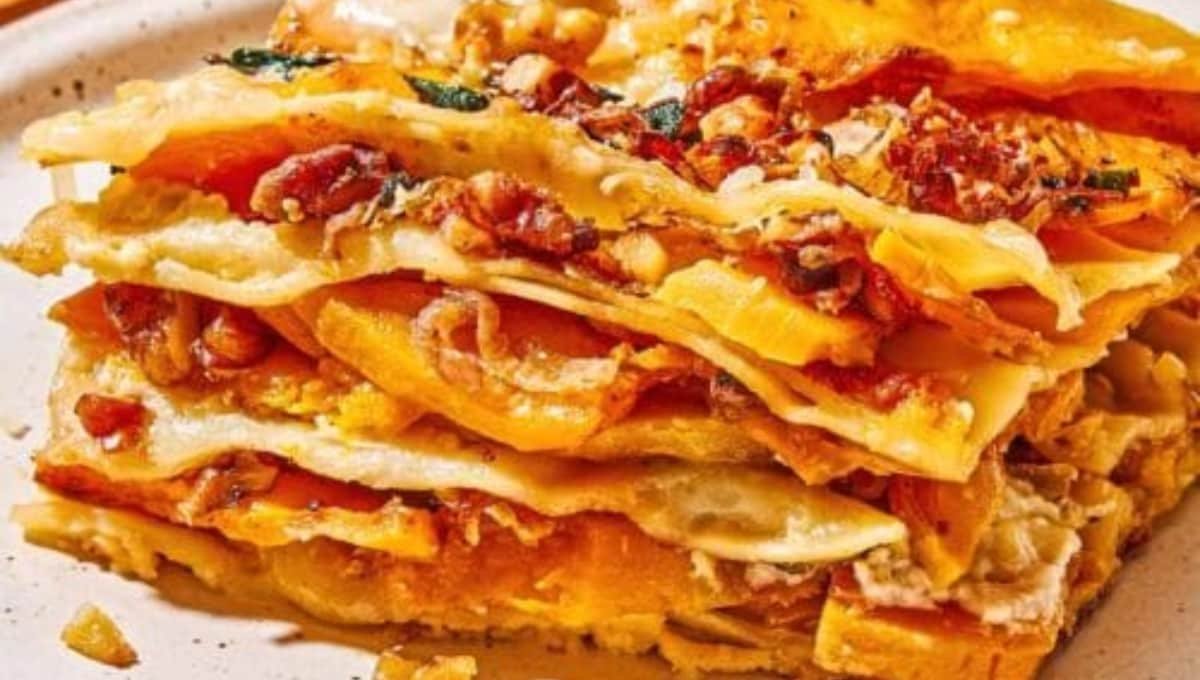
Silas walked into the kitchen, took one sniff, and asked if I’d finally made a lasagna he could actually get excited about. That’s saying a lot coming from a guy who thinks regular lasagna is “fine, I guess.”
This butternut squash lasagna is the reason I stopped feeling guilty about loving fall food a little too much. It’s creamy, it’s a little sweet, it’s got that nutty sage flavor running through every layer, and it somehow feels lighter than a regular meat lasagna while still being completely satisfying.
No red sauce here. Just roasted squash, a silky homemade bechamel, three kinds of cheese, and layers of noodles that soak up all of it.
The first time I made this, I honestly wasn’t sure it would work. Squash and cheese felt like an odd pairing on paper. One bite in, and I understood why so many fall recipes lean on this combination. The natural sweetness of the squash plays off the salty parmesan and the earthy sage in a way that just makes sense once you taste it.
I’ve made this one more times than I can count, and I’ve messed it up enough times to know exactly what makes it work. So let’s get into it.
What You’ll Need
Here’s everything going into this dish. Nothing fancy, just good ingredients working together.
| Ingredient | Amount |
|---|---|
| Butternut squash, peeled and cubed | 1 medium (about 3 lbs) |
| Olive oil | 2 tbsp |
| Fresh sage, chopped | 1 tbsp (or 1 tsp dried) |
| Garlic, minced | 4 cloves |
| Yellow onion, diced | 1 medium |
| Butter | 4 tbsp |
| All-purpose flour | 4 tbsp |
| Whole milk | 3 cups |
| Ground nutmeg | ½ tsp |
| Ricotta cheese | 15 oz |
| Large egg | 1 |
| Shredded mozzarella | 3 cups |
| Grated parmesan | 1 cup |
| Lasagna noodles | 12 |
| Salt and black pepper | To taste |
| Fresh parsley, for garnish | A small handful |
Side Note: If your squash feels like a workout to peel, microwave it whole for 3 minutes first. The skin softens up and your knife will thank you.
Read this also: This Chicken & Rice Meal Prep Actually Tastes Better on Day 4
Tools You’ll Need
- Large baking sheet
- Large pot (for boiling noodles)
- Medium saucepan (for the bechamel)
- Mixing bowls
- 9×13 baking dish
- Box grater
- Aluminum foil
- Potato masher or blender
Pro Tips Before You Start
1. Roast your squash until it’s almost falling apart. You want deep caramelization on the edges. That’s where all the sweetness comes from, and it makes mashing it later a breeze.
2. Don’t skip the nutmeg. It sounds like a small detail, but it’s what makes bechamel taste like bechamel instead of plain white sauce. A little goes a long way.
3. Salt every single layer. Squash, ricotta, and bechamel all need their own seasoning. If you only salt at the end, the middle layers taste flat.
4. Let the lasagna rest for 15 minutes after baking. I know it’s torture when your kitchen smells like this, but cutting in too early means a soupy mess on your plate instead of clean layers.
5. Use no-boil noodles if you’re short on time. Just add an extra half cup of milk to your bechamel so the noodles have enough moisture to soften while baking.
How to Make Butternut Squash Lasagna
Step 1: Roast the squash
Preheat your oven to 425°F. Toss the cubed squash with olive oil, salt, and pepper on a baking sheet. Roast for 30 to 35 minutes, flipping halfway, until it’s soft and browned at the edges.
Once it’s cool enough to handle, mash it roughly with a fork or potato masher. You want it chunky, not pureed smooth.
Step 2: Cook the noodles
While the squash roasts, bring a large pot of salted water to a boil. Cook the lasagna noodles according to package directions, usually 8 to 10 minutes. Drain and lay them flat on a towel so they don’t stick together.
Step 3: Sauté the aromatics
In a medium saucepan, melt 2 tablespoons of butter over medium heat. Add the onion and cook for 5 minutes until soft. Stir in the garlic and sage and cook for another minute until fragrant.
Step 4: Make the bechamel
Add the remaining butter to the same pan. Once melted, whisk in the flour and cook for 1 minute, stirring constantly. Slowly pour in the milk, whisking the whole time so no lumps form.
Simmer for 5 to 7 minutes until the sauce thickens enough to coat the back of a spoon. Stir in the nutmeg, salt, and pepper. Fold the mashed squash into the sauce.
Step 5: Mix the ricotta filling
In a bowl, combine the ricotta, egg, and half the parmesan. Season with a pinch of salt and pepper.
Step 6: Layer everything
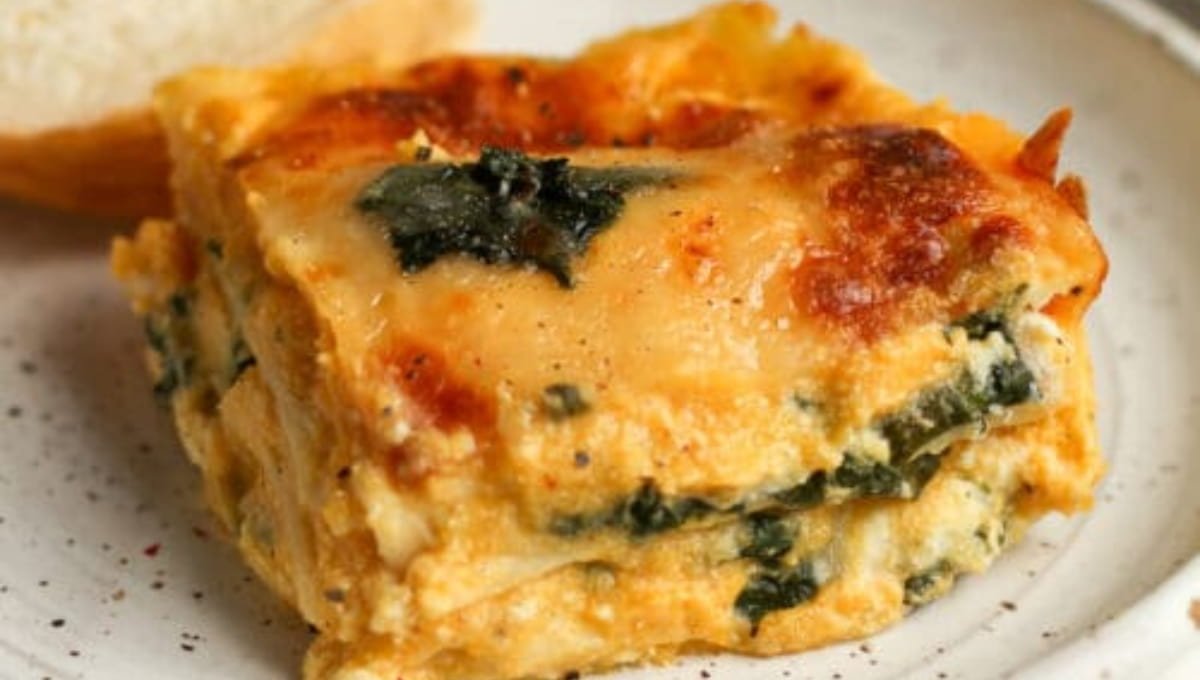
Lightly grease your 9×13 baking dish. Spread a thin layer of the squash bechamel on the bottom. Add a layer of noodles, then a layer of ricotta mixture, then a layer of squash bechamel, then a sprinkle of mozzarella.
Repeat these layers until everything is used up, finishing with a generous layer of mozzarella and the remaining parmesan on top.
Step 7: Bake
Cover the dish with foil and bake at 375°F for 25 minutes. Remove the foil and bake for another 20 minutes, until the top is golden and bubbling.
Let it rest for 15 minutes before slicing. Garnish with fresh parsley.
Read this also: This Honey Mustard Chicken Recipe Beats Takeout Every Time
Substitutions and Variations
| Original | Substitute | Notes |
|---|---|---|
| Butternut squash | Pumpkin or acorn squash | Similar sweetness, slightly different texture |
| Whole milk | Half and half | Makes it richer |
| Ricotta | Cottage cheese, blended smooth | Lighter option |
| Fresh sage | Fresh thyme | Different but still cozy |
| Regular noodles | Gluten-free lasagna noodles | Check bake time, they cook faster |
| Mozzarella | Fontina | Melts beautifully and adds a nutty edge |
Want a protein boost? Add a layer of cooked and crumbled Italian sausage between the squash and ricotta layers. It turns this into a heartier main that even the pickiest meat eaters at your table will love.
Make Ahead Tips
You can assemble this whole lasagna up to 24 hours in advance. Cover it tightly and keep it in the fridge, then bake it straight from cold. Just add an extra 10 minutes to the covered baking time.
You can also freeze it unbaked. Wrap it well in plastic and foil, and it’ll keep for up to 3 months. Thaw overnight in the fridge before baking.
Storage and Reheating
Leftovers keep well in an airtight container in the fridge for 4 to 5 days.
To reheat, cover with foil and warm in a 350°F oven for about 20 minutes, or microwave individual slices for 1 to 2 minutes. The oven method keeps the layers from getting mushy.
Side Note: This lasagna actually tastes even better on day two once the flavors have had time to settle in together.
Nutritional Snapshot
Rough estimate per serving, based on 8 servings total:
| Nutrient | Amount |
|---|---|
| Calories | ~380 |
| Protein | 17g |
| Carbohydrates | 34g |
| Fat | 20g |
| Fiber | 3g |
These numbers will shift depending on the exact cheeses and noodles you use, so treat this as a general guide rather than an exact figure.
Cooking Time Efficiency Tips
Weeknights are busy, so here’s how I speed this recipe up without cutting corners.
- Roast the squash and boil the noodles at the same time, instead of doing them one after the other. It saves a good 15 minutes.
- Buy pre-cubed squash when you can find it. It’s a small cost that saves real prep time.
- Make the bechamel while the squash is still roasting so everything comes together at once.
- Assemble the lasagna the night before, so all you have to do the next day is slide it into the oven.
What to Serve With It
This lasagna is rich, so I like pairing it with something bright and crunchy on the side.
- A simple arugula salad with lemon vinaigrette
- Garlic bread, for the people who need bread with everything
- Roasted brussels sprouts with balsamic glaze
- A glass of dry white wine, like a Pinot Grigio
FAQs Related to Butternut Squash Lasagna
1. Can I use frozen butternut squash?
Yes. Thaw it fully and pat it dry before roasting, since frozen squash holds extra water that can make your bechamel too thin.
2. Why is my bechamel lumpy?
You probably added the milk too fast. Pour it in slowly, a little at a time, whisking constantly so the flour has a chance to dissolve smoothly.
3. Can I make this vegetarian?
It already is, as long as you’re using a rennet-free parmesan. Double check the label if that matters to you.
4. Do I have to peel the squash myself?
No. Most grocery stores sell pre-cubed butternut squash in the produce section, which saves a solid 15 minutes of prep time.
5. Can I make this without ricotta?
You can swap in mascarpone for an even richer, silkier texture, though it will taste slightly sweeter.
Conclusion
This butternut squash lasagna has become one of those recipes I make the second the weather turns cold. It’s the kind of dish that makes your whole house smell like something good is happening.
Silas asks for it by name now, which tells you everything you need to know.
Give this one a try this week, and let me know in the comments how it turned out for you. If you tweaked anything or ran into questions along the way, drop them below. I read every single one.