
Silas has a theory that every hard week should end with a bowl of rice and something sticky piled on top. I used to roll my eyes at that. Then I made these Korean bulgogi gochujang beef bowls, and now I repeat his theory to anyone who will listen.
My first try at homemade bulgogi did not go well. I dumped a pound and a half of beef into one skillet, and it boiled into gray, sad strips swimming in their own juice.
Silas ate two helpings anyway. He’s sweet like that.
I couldn’t let it go, though. A few test batches later (and one very smoky kitchen), I figured out what went wrong. The fix was so simple it honestly annoyed me.
I’m sharing that exact trick in the Pro Tips below. It’s the difference between restaurant-style caramelized beef and a soggy letdown.
Keep reading for what a plain Asian pear does to steak, too. It’s the quiet hero of this whole recipe, and it’s the one ingredient people are most tempted to skip.
Why This Bulgogi Bowl Recipe Works So Well in 2026
Bulgogi isn’t a passing internet trend. It’s one of Korea’s oldest and most loved dishes, and the name literally means “fire meat.” Bul means fire, and gogi means meat.
Here’s the part that surprised me. Its roots trace back to the Goguryeo kingdom (37 BCE to 668 CE), where people grilled marinated meat on skewers in a dish called maekjeok.
Centuries later, during the Joseon Dynasty, a thinly sliced version called neobiani was served to wealthy and noble families. So yes, you’re basically eating like Korean aristocracy. In sweatpants. On a Tuesday.
This version keeps that classic sweet and savory base, then adds gochujang for a smoky, slow-building heat. Here’s why it works:
- Balanced flavor: Soy sauce, brown sugar, and honey give you that signature bulgogi taste.
- Gentle heat: Gochujang brings warmth and deep fermented flavor without scorching your tongue.
- Melt-in-your-mouth beef: Grated Asian pear has natural enzymes that help tenderize the meat.
- Quick cooking: Paper-thin slices sear in about 2 to 3 minutes per batch.
- Meal prep gold: Every component holds up in the fridge, so lunches are covered for days.
Side Note: Traditional bulgogi isn’t spicy at all. The gochujang is a popular twist. Cooking for kids or spice-shy eaters? Leave it out of the marinade and serve the drizzle on the side.
Read this also: High-Protein Overnight Oats: 35g Protein, Tastes Like Pudding
What You’ll Need
Most of this is probably sitting in your pantry right now. The rest takes one quick lap through the Asian aisle.
For the Bulgogi Beef
| Ingredient | Amount |
|---|---|
| Boneless ribeye steak (or top sirloin) | 1.5 lbs |
| Low-sodium soy sauce | 1/3 cup |
| Asian pear, peeled and grated | 1/2 pear (about 1/2 cup) |
| Yellow onion, grated | 1/2 small onion |
| Garlic cloves, minced | 5 cloves |
| Fresh ginger, grated | 1 tbsp |
| Gochujang (Korean red chili paste) | 2 tbsp |
| Brown sugar | 2 tbsp |
| Honey | 1 tbsp |
| Toasted sesame oil | 1 tbsp |
| Mirin | 1 tbsp |
| Freshly ground black pepper | 1/2 tsp |
| Green onions, thinly sliced | 2 stalks |
| Avocado oil (or any neutral oil) | 1 tbsp, for searing |
For the Gochujang Drizzle
| Ingredient | Amount |
|---|---|
| Gochujang | 2 tbsp |
| Honey | 1 tbsp |
| Rice vinegar | 1 tbsp |
| Toasted sesame oil | 1 tsp |
| Warm water | 1 to 2 tbsp |
For the Bowls
| Ingredient | Amount |
|---|---|
| Short-grain white rice (uncooked) | 1 1/2 cups (about 4 cups cooked) |
| English cucumber, thinly sliced | 1 cucumber |
| Rice vinegar (for the cucumbers) | 1 tsp |
| Kosher salt | 1 pinch |
| Carrots, julienned | 2 medium |
| Kimchi | 1 cup |
| Large eggs (optional) | 4 |
| Toasted sesame seeds | 2 tsp |
| Extra green onions | For garnish |
Side Note: Flip your gochujang tub over before you buy it. Back in 2010, Korea introduced a five-level heat scale for gochujang, so lots of tubs show a heat level right on the package. “Medium hot” is a safe middle ground for most families.
Tools You’ll Need
- Sharp chef’s knife for slicing the beef paper thin
- Cutting board
- Box grater or microplane for the pear, onion, and ginger
- Large mixing bowl or a gallon zip-top bag for marinating
- Measuring cups and spoons
- Rice cooker or a medium saucepan with a tight lid
- 12-inch cast iron skillet (a heavy stainless pan works too)
- Tongs for lifting and flipping the beef
- Small bowl and whisk for the drizzle
- Four serving bowls
Pro Tips for First-Timers
- Freeze the steak for 20 to 30 minutes. Slightly firm beef is way easier to slice thin. Soft steak slides around and ends up in thick, chewy chunks.
- Slice against the grain. Find the lines running through the meat and cut across them, not alongside them. Shorter muscle fibers mean a more tender bite.
- Cook in small batches over high heat. This is the trick I promised you. Crowding the pan drops the temperature and steams the beef. Give each slice some room, and you’ll get those dark, sticky, caramelized edges.
- Keep an eye on the sugar. Gochujang, honey, and brown sugar scorch fast. If black bits build up in the pan, wipe it out with a paper towel between batches.
- Stick to the marinating sweet spot. Thirty minutes works in a pinch. Four to eight hours is ideal. Past 24 hours, the pear enzymes can turn the texture a little mushy.
How to Make Korean Bulgogi Gochujang Beef Bowls
Plan on about 35 minutes of hands-on time, plus marinating. Below is the full play-by-play.
Step 1: Chill and Slice the Beef
Pop the steak in the freezer for 20 to 30 minutes, until it feels firm but not frozen solid.
Slice it against the grain into thin strips, about 1/8 inch thick. Thinner is better here.
Step 2: Mix the Bulgogi Marinade
Grate the pear and onion straight into a large bowl so you catch every drop of juice. That juice is pure flavor.
Add the soy sauce, gochujang, brown sugar, honey, garlic, ginger, sesame oil, mirin, and black pepper. Whisk until the gochujang fully dissolves and no clumps remain.
Step 3: Marinate the Beef
Add the sliced beef and half the green onions. Toss everything with clean hands or tongs until every slice is coated.
Cover and refrigerate for at least 30 minutes, ideally 4 to 8 hours.
Step 4: Cook the Rice
Rinse the rice in cold water, swirling and draining two or three times, until the water looks mostly clear. This washes off extra surface starch so the grains don’t turn gummy.
Cook it in a rice cooker or saucepan following the package directions. Keep it covered and warm.
Step 5: Whisk the Gochujang Drizzle
In a small bowl, whisk the gochujang, honey, rice vinegar, and sesame oil. Add warm water a tablespoon at a time until it drizzles easily off a spoon.
Step 6: Prep the Toppings
Toss the cucumber slices with 1 teaspoon of rice vinegar and a pinch of salt. Let them quick-pickle while you cook.
Cut the carrots into thin matchsticks and scoop the kimchi into a small bowl.
Step 7: Sear the Beef in Batches
Heat your cast iron skillet over medium-high to high heat. Add a little oil and wait until it shimmers.
Using tongs, lift a handful of beef from the bowl and let the extra marinade drip off. Lay it flat in a single layer.
Leave it alone for 1 to 2 minutes. Flip and cook one more minute, until the edges look dark and glossy. Move it to a plate and repeat, adding a splash of oil as needed.
Step 8: Fry the Eggs (Optional)
Wipe out the skillet, lower the heat to medium, and fry the eggs sunny side up. A runny yolk melting into hot rice is pure comfort.
Step 9: Build Your Bowls
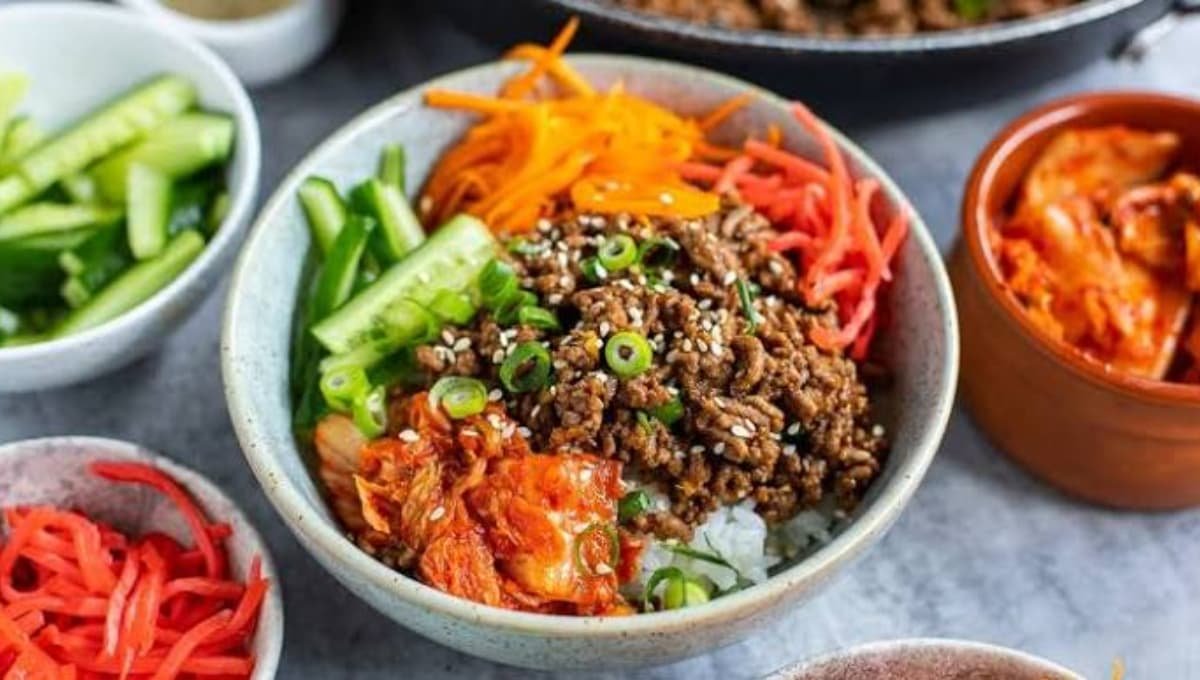
Scoop rice into each bowl. Add a generous pile of beef, then tuck the cucumbers, carrots, and kimchi around it.
Finish with a fried egg, a zigzag of gochujang drizzle, sesame seeds, and the rest of the green onions. Dig in while it’s hot.
Read this also: Why Is Cottage Cheese the Key to Creamy Egg Bites? Try This
Substitutions and Variations
Can’t find an ingredient? No stress. Here are swaps I’ve tested or would happily serve Silas.
| Swap Out | Use Instead | Good to Know |
|---|---|---|
| Asian pear | Ripe Bosc pear or Fuji apple | Use the same amount |
| Asian pear | 1 small kiwi, grated | Very strong enzymes, so marinate under 4 hours |
| Ribeye | Top sirloin, flank steak, or tenderloin | Sirloin is leaner and easier on the wallet |
| Beef | Boneless chicken thighs | Slice thin and cook to 165°F inside |
| Soy sauce | Tamari or coconut aminos | Coconut aminos runs sweeter, so cut the sugar a bit |
| Mirin | Dry sherry plus 1/2 tsp sugar | Adds a similar mellow sweetness |
| White rice | Brown rice, quinoa, or cauliflower rice | Cauliflower rice keeps carbs low |
Diet-Friendly Swaps
- Gluten-free: Use tamari and pick a gochujang labeled gluten-free. Many store-bought brands contain wheat, so read the label.
- Low-carb: Serve over cauliflower rice and swap the brown sugar and honey for a monk fruit sweetener. Gochujang has sugar too, so go a little lighter.
- Vegetarian: Use pressed extra-firm tofu or thick slices of king oyster mushroom. Choose a vegan kimchi, since many brands use fish sauce or salted shrimp.
- Dairy-free: Good news, this recipe already is.
Fun Twists to Try
- Lettuce wraps: Tuck the beef and a spoonful of rice into butter lettuce leaves. Koreans call wrapped bites like this ssam.
- Bulgogi tacos: Pile the beef into warm corn tortillas with chopped kimchi and the drizzle.
- Next-day fried rice: Fry cold leftover rice with chopped kimchi and any leftover beef.
Make-Ahead Tips
- Marinate the night before: Mix the beef and marinade up to 24 hours ahead, so dinner is mostly searing.
- Freeze it raw: Seal the marinated beef in a freezer bag, press out the air, and freeze for up to 3 months. Thaw it overnight in the fridge.
- Prep the drizzle early: The gochujang sauce keeps in a jar in the fridge for about a week.
- Batch the rice: Cook a big pot on Sunday and portion it out for the week.
Leftovers and Storage
Store each component in its own airtight container. Mixed bowls get soggy fast, and nobody wants warm cucumbers.
| Component | Fridge | Freezer |
|---|---|---|
| Cooked bulgogi beef | 3 to 4 days | 2 to 3 months |
| Cooked rice | 3 to 4 days | Up to 1 month |
| Gochujang drizzle | About 1 week | Not recommended |
| Cucumbers and carrots | 1 to 2 days | Not recommended |
Reheating: Warm the beef in a hot skillet for 1 to 2 minutes with a splash of water. In the microwave, cover it and heat in 30-second bursts.
For rice, sprinkle on a little water and cover it with a damp paper towel before microwaving. Add the cold toppings once everything is hot.
Side Note: Get cooked rice into the fridge within an hour or so. Rice left out too long can grow bacteria whose toxins survive reheating.
Nutrition Snapshot (Per Bowl)
These are rough estimates for one of four bowls, made with white rice and no egg. Your brands and cut of beef will shift the numbers.
| Nutrient | With Ribeye | With Top Sirloin |
|---|---|---|
| Calories | About 880 | About 700 |
| Protein | About 43 g | About 45 g |
| Carbohydrates | About 80 g | About 80 g |
| Fat | About 42 g | About 21 g |
| Fiber | About 3 g | About 3 g |
| Sodium | About 1,400 mg | About 1,400 mg |
A fried egg adds roughly 90 calories and 6 grams of protein. Want less sodium? Go easy on the kimchi and drizzle.
What to Serve With Bulgogi Bowls
The bowl is a full meal on its own. Still, a couple of simple sides turn dinner into a little Korean feast.
- Kongnamul muchim: crunchy seasoned soybean sprouts
- Sigeumchi namul: garlicky sesame spinach
- Gyeran jjim: fluffy Korean steamed eggs
- Doenjang jjigae: a cozy fermented soybean paste stew
- Boricha: roasted barley tea, a nutty and caffeine-free sip common at Korean tables
Time-Saving Moves for Busy Nights
- Start the rice first. It cooks on its own while you handle everything else.
- Look for pre-sliced bulgogi beef at Korean markets. It skips the freezing and slicing completely.
- Blitz the pear, onion, garlic, and ginger in a blender instead of grating by hand.
- Double the marinade and freeze half the beef for a future dinner.
FAQs Related to Bulgogi Bowl
1. What’s the difference between bulgogi and gochujang beef?
Classic bulgogi uses a sweet soy sauce marinade and has no heat. Gochujang beef adds Korean red chili paste, which brings spice, smokiness, and a fermented depth.
2. What is the best cut of beef for bulgogi?
Ribeye is the top pick because its marbling keeps the slices juicy. Top sirloin is a leaner budget choice, and tenderloin works if you feel like splurging.
3. Can I cook bulgogi on the grill?
Yes, and it’s the most traditional way to do it. Use a grill basket or a grill pan, because thin slices love to slip through the grates.
4. Can I use ground beef for bulgogi bowls?
You can. Brown 1.5 pounds of ground beef, drain the fat, then pour in the marinade and simmer for 3 to 4 minutes until it turns sticky. It’s a great shortcut when you skip the slicing.
5. Is gochujang very spicy?
Gochujang tastes sweet, savory, and gently spicy, with a funky depth from fermentation. Taste a tiny bit straight from the tub first, then add more or less to suit your crew.
Wrapping Up
Some recipes are nice once. This one sneaks into your weekly rotation and refuses to leave.
Sticky, caramelized beef. Fluffy rice. A cool crunch of cucumber and a little fire from the gochujang. It’s takeout-style comfort food without the delivery fee.
Silas now asks for these bowls every Friday. I’ve stopped pretending I mind.
So grab that Asian pear, slice your beef thin, and give your skillet room to breathe. Your first batch might not look picture-perfect, and that’s completely fine. Mine sure didn’t.
Once you make it, come back and tell me how it went in the comments. Did you go full spice or keep it mild? Got a question before you start? Drop it below, and I’ll help you sort it out.