Silas once timed me making dinner. It took 55 minutes, I burned the garlic, and we ordered pizza anyway.
We do not talk about that night.
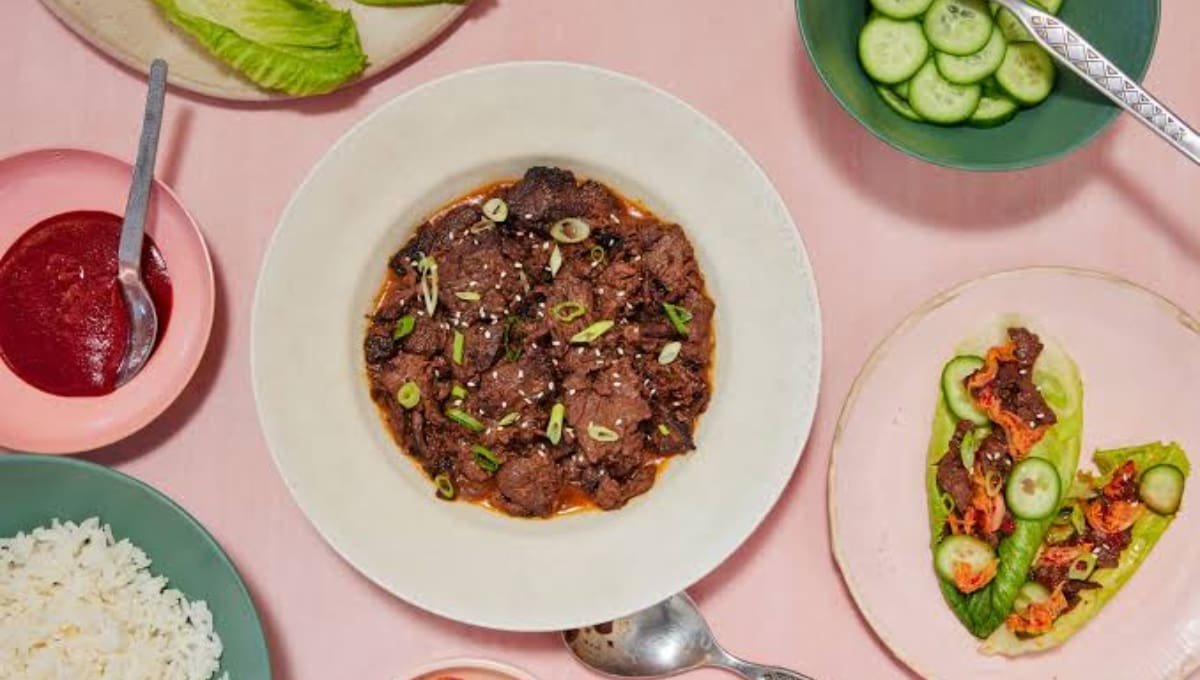
These Korean beef bowls are the reason it never happened again. Sticky, salty-sweet beef over warm rice, with crunchy cucumbers and a runny egg on top.
Everything cooks in one skillet, and the whole thing takes about 25 minutes. The sauce also has one ingredient I almost left out of the first batch. I’m so glad I didn’t.
Side Note: This is a weeknight shortcut version, not traditional bulgogi. Real bulgogi uses thin sliced beef and a longer marinade, and I love it, but I rarely have that kind of patience on a Tuesday.
Why These Korean Beef Bowls Work So Well
Korean beef bowls are rice bowls topped with ground beef cooked in a sweet and savory sauce made from soy sauce, garlic, ginger, brown sugar, and sesame oil. Most versions take under 30 minutes.
Here’s why this one keeps landing on our table:
- One skillet. The beef and the sauce cook together, so dishes stay low.
- Pantry friendly. Most of the sauce comes from bottles you probably own already.
- Budget friendly. A pound of ground beef feeds four people.
- Meal prep friendly. It tastes just as good on day three.
Here’s a quick look at the numbers before we get going.
| Detail | Info |
|---|---|
| Prep time | 10 minutes |
| Cook time | 15 minutes |
| Total time | 25 minutes |
| Servings | 4 bowls |
| Skill level | Beginner |
What You’ll Need
Nothing here is hard to find. If your grocery store has a Korean or Asian foods aisle, you’ll spot the gochujang right away.
For the Beef
- 1 pound ground beef (80/20 works best for flavor)
- 1 teaspoon neutral oil, like avocado or canola
- 4 garlic cloves, minced
- 1 tablespoon fresh ginger, grated
For the Sauce
- 1/4 cup low-sodium soy sauce
- 3 tablespoons packed brown sugar
- 2 tablespoons toasted sesame oil
- 1 tablespoon gochujang (Korean chili paste)
- 1 tablespoon rice vinegar
- 1/2 teaspoon black pepper
- 1/2 teaspoon red pepper flakes (optional)
Read this also: Stuffed Peppers With Ground Beef Without the Crunchy Bite
For the Bowls
- 1 cup uncooked jasmine rice (about 3 cups cooked)
- 1 large cucumber, thinly sliced
- 1 tablespoon rice vinegar, for the cucumbers
- 1 pinch of salt and 1 pinch of sugar, for the cucumbers
- 2 medium carrots, shredded
- 4 green onions, sliced
- 2 cups baby spinach
- 4 large eggs
- 2 teaspoons sesame seeds
- Kimchi, for serving (optional)
Tools You’ll Need
- Large skillet (12 inch is perfect)
- Wooden spoon or a meat chopper
- Medium saucepan with a lid, or a rice cooker
- Small mixing bowl and a whisk
- Microplane or fine grater
- Sharp knife and cutting board
- Measuring cups and spoons
- Vegetable peeler
- Small nonstick pan for the eggs
Pro Tips for First Timers
I’ve made this recipe more times than I can count, and these are the things I wish someone had told me at the start.
- Whisk the sauce first. Once the beef is cooking, you won’t have time to measure anything. Have it waiting in a bowl.
- Let the beef sit. Press it flat and leave it alone for two minutes before breaking it up. Those browned edges are where the flavor lives.
- Drain, but not completely. Leave about one tablespoon of fat in the pan. It carries the garlic and ginger flavor into every bite.
- Add the garlic late. Garlic burns fast, and burnt garlic turns bitter. Put it in after the beef is browned and give it about 30 seconds.
- Taste before you serve. Soy sauce brands vary a lot. A splash of rice vinegar fixes a flat sauce, and a pinch of sugar fixes a salty one.
How to Make Korean Beef Bowls Step by Step
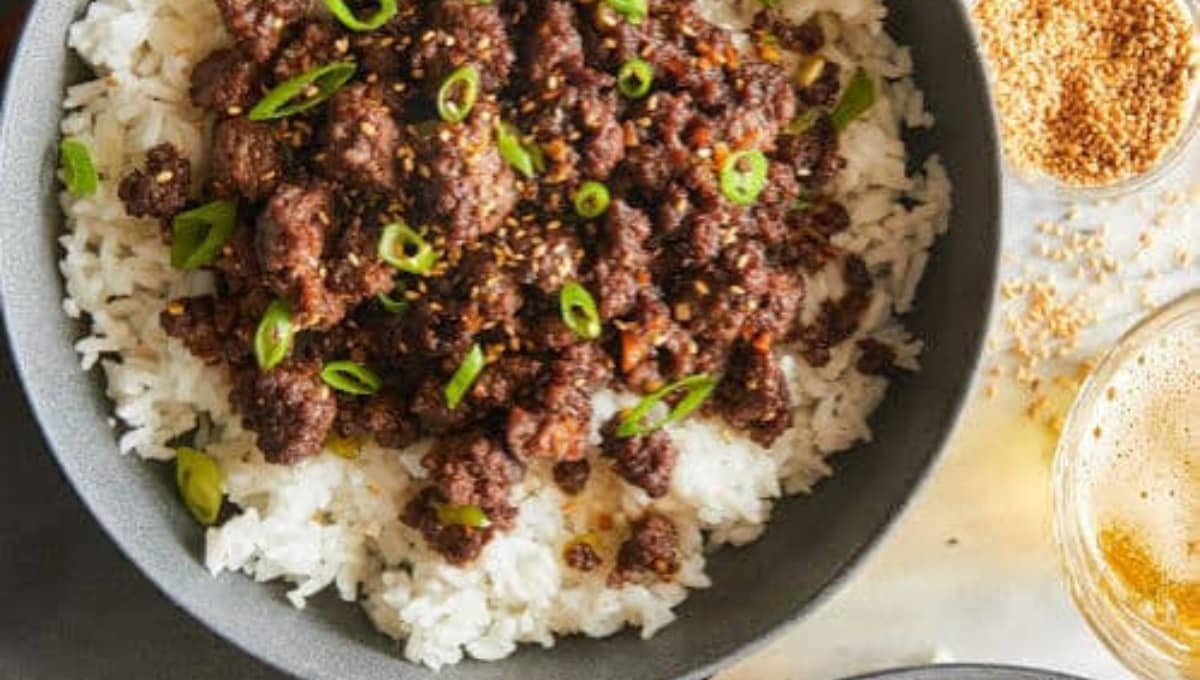
Step 1: Start the Rice
Rinse the rice in cold water until it runs mostly clear. Cook it according to the package, or in your rice cooker.
Rice usually takes longer than the beef, so this goes first.
Step 2: Whisk the Sauce
In a small bowl, whisk together the soy sauce, brown sugar, sesame oil, gochujang, 1 tablespoon of rice vinegar, black pepper, and red pepper flakes.
Whisk until the gochujang fully dissolves. Set it near the stove.
Step 3: Prep the Toppings
Toss the sliced cucumber with the second tablespoon of rice vinegar, a pinch of salt, and a pinch of sugar. Let it sit while you cook.
Shred the carrots, slice the green onions, and have the spinach ready. This takes about five minutes.
Step 4: Brown the Beef
Heat the oil in your large skillet over medium-high heat. Add the ground beef and press it into an even layer.
Leave it for two minutes without touching it. Then break it into small crumbles and cook for another 5 to 6 minutes, until no pink remains. The beef should reach 160°F inside.
Step 5: Drain the Extra Fat
Tilt the pan and spoon out most of the grease, leaving about a tablespoon behind. Drain it into a heatproof container, not the sink.
Step 6: Add the Garlic and Ginger
Push the beef to one side and add the garlic and ginger to the empty space. Stir them for 30 seconds until they smell amazing.
Then mix everything together.
Step 7: Simmer in the Sauce
Pour the sauce over the beef and stir well. Let it bubble for 3 to 4 minutes, stirring now and then.
The sauce will thicken and cling to the meat. Once it looks glossy and sticky, turn off the heat.
Step 8: Wilt the Spinach and Cook the Eggs
Toss the spinach into the hot skillet for about one minute. The leftover heat wilts it perfectly.
In your small nonstick pan, fry the eggs in a little oil until the whites are set and the yolks are still runny. Sunny side up works great.
Step 9: Build the Bowls
Scoop rice into four bowls. Top each with beef and spinach, then add the cucumbers, carrots, and an egg.
Finish with green onions and sesame seeds. Add kimchi on the side if you like a little funk.
Read this also: Why Is Your Crock Pot Pot Roast Still Tough?
Substitutions and Variations
This recipe bends easily, which is good news if you’re missing one thing at 6 pm.
| Ingredient | Swap | Note |
|---|---|---|
| Ground beef | Ground turkey or chicken | Add 1 extra teaspoon of oil since they’re leaner |
| Ground beef | Plant-based crumbles | Cook just until heated through |
| Gochujang | Sriracha plus a pinch of sugar | Flavor will be less deep but still tasty |
| Soy sauce | Tamari or coconut aminos | Coconut aminos are sweeter, so cut the sugar a bit |
| Brown sugar | Honey or maple syrup | Use 2 tablespoons |
| Jasmine rice | Brown rice, quinoa, or cauliflower rice | Brown rice needs a longer cook time |
| Spinach | Shredded cabbage, broccoli, or edamame | Cabbage adds a nice crunch |
Fun Variations to Try
- Extra spicy: Double the gochujang and add a spoonful of chili crisp on top.
- Lettuce wraps: Spoon the beef into butter lettuce leaves for a lighter dinner.
- Fried rice style: Stir the rice right into the skillet with the beef for a one-pan meal.
- Gluten free: Use tamari and double check your gochujang label, since some brands contain wheat.
Make Ahead Tips
This is one of my favorite recipes for meal prep. The beef reheats well, and the flavor deepens overnight.
- Cook the beef up to 3 days ahead and store it in an airtight container.
- Keep the cucumbers separate so they stay crisp.
- Cook the eggs fresh, since they get rubbery when reheated.
- Make the sauce up to 5 days ahead and keep it in a jar in the fridge.
Leftovers and Storage
Store the beef and rice in separate airtight containers in the fridge for up to 4 days. Cool the rice quickly and get it into the fridge within an hour of cooking.
To reheat, add a splash of water to the beef and warm it in a skillet or microwave until steaming hot. Leftovers should reach 165°F.
Can You Freeze It?
Yes, the beef freezes beautifully for up to 3 months. Let it cool fully, pack it into freezer bags, and flatten them so they thaw faster.
Thaw overnight in the fridge. I skip freezing the cucumbers, carrots, and eggs.
Nutrition Snapshot
These are rough estimates for one bowl without the egg, since brands vary.
| Per Serving | Approximate Amount |
|---|---|
| Calories | 520 |
| Protein | 28 g |
| Carbohydrates | 50 g |
| Fat | 22 g |
| Sodium | 700 mg |
An egg adds about 70 calories and 6 grams of protein.
What to Serve With Korean Beef Bowls
The bowls are filling on their own, but a few sides turn them into a full spread.
- Miso soup for something warm and light
- Steamed dumplings if you want a bigger feast
- Sesame spinach or sautéed bean sprouts for a classic Korean side
- Kimchi for tang and a little crunch
- Cold barley tea or sparkling water to drink
FAQs Related to Korean Beef Bowls
1. What is Korean beef bowl sauce made of?
The sauce is a mix of soy sauce, brown sugar, toasted sesame oil, garlic, ginger, and rice vinegar. Gochujang adds a deep, slightly spicy, fermented flavor.
2. Is Korean ground beef the same as bulgogi?
Not quite. The name bulgogi means “fire meat,” and the traditional dish uses thin sliced beef that is marinated and grilled. The ground beef version borrows those flavors for a faster dinner.
3. Can I make Korean beef bowls without gochujang?
You can. Sriracha with a pinch of sugar gets you close, or just skip it for a milder bowl. Gochujang is traditionally fermented for months, so its depth is hard to copy exactly.
4. How do I make the beef less salty?
Use low-sodium soy sauce, like in this recipe, and add a splash of rice vinegar or a little extra rice to balance each bite.
5. What rice works best for Korean beef bowls?
Jasmine rice is my go-to, but short grain white rice is more traditional and a bit stickier. Both soak up the sauce well.
6. Can I make this in an air fryer or slow cooker?
The skillet is the easiest way to get browned beef and a sticky sauce. A slow cooker will give you softer, wetter beef, so I’d stick with the pan.
Conclusion
These Korean beef bowls are the dinner I make when I want something big on flavor and small on effort.
Twenty-five minutes, one skillet, and a bowl that looks like you put in way more work than you did. Silas has stopped asking about takeout, which I’m taking as a win.
Give them a try this week, then come back and leave a comment to tell me how they turned out. Did you go spicy, add kimchi, or pile on the egg? And if something didn’t work, ask away and I’ll help you sort it out.