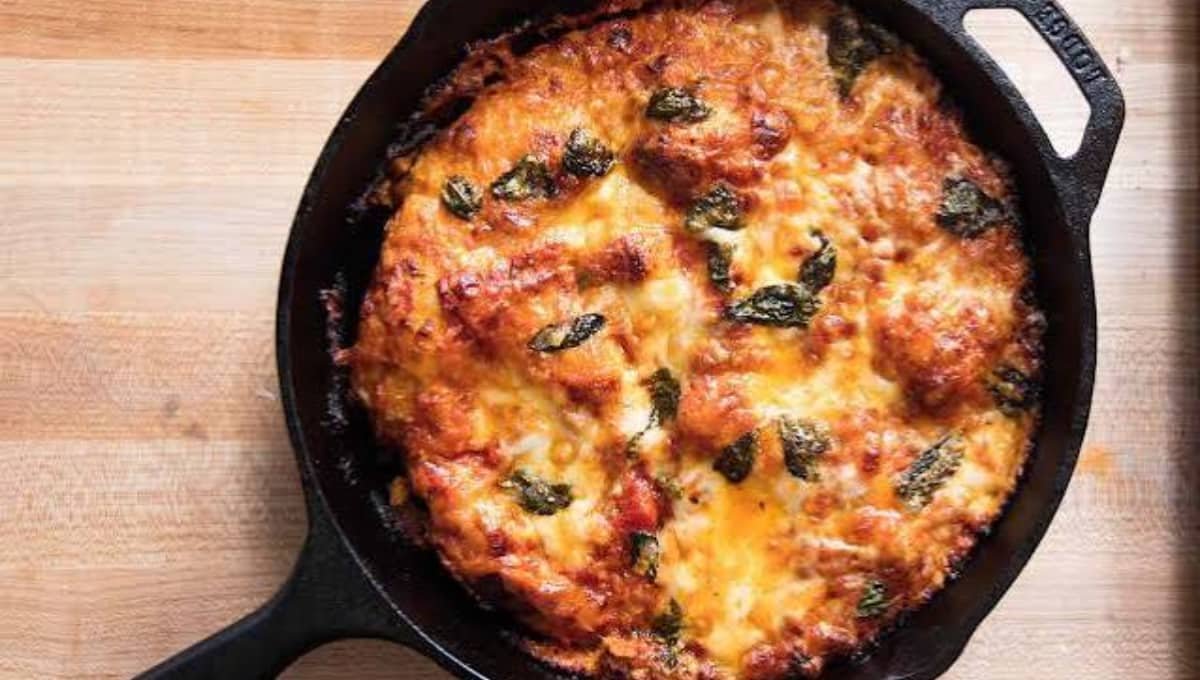
Most homemade pizza is good. Not great. And the gap between the two is way smaller than you think.
For years, my pizza nights ended the same way. Pale bottom, a slightly gummy middle, and cheese sliding around like it had somewhere better to be.
Silas ate every slice and told me it was “really nice.” If you’ve ever been married, you know that’s code for “please do something about this.”
So I started testing. Different flours, different oven temps, different rise times, a truly embarrassing number of Friday nights.
What I found is that great pizza comes down to four small changes. No fancy oven, no secret from an Italian grandmother. I’ll walk you through all four, and the last one surprised me the most.
Side Note: This homemade pizza recipe makes two 12 inch pizzas, so you get one for dinner and one for the “I’ll just have one more slice” round.
Why This Homemade Pizza Recipe Works in 2026
What makes homemade pizza great? A very hot oven, a well-rested dough, dry cheese, and a light hand with toppings. Get those four right and even a regular home oven gives you a crisp, chewy, bubbly crust.
Here’s how each one helps:
- A screaming hot surface: A preheated stone or steel cooks the bottom fast, so you get crunch instead of pale and floppy.
- A dough that rests: Time lets the gluten relax and the flavor build. It’s also why the dough stretches without a fight.
- Low-moisture mozzarella: Less water means the cheese melts and browns instead of pooling into a puddle.
- Restraint: Too much sauce and too many toppings steam the middle. Less really is more here.
Here’s the wow fact I love. A traditional Neapolitan pizza bakes in a wood-fired oven at around 900°F (485°C) in about 60 to 90 seconds.
Your home oven tops out around 500 to 550°F (260 to 290°C), so we make up the difference with a long preheat and a hot baking surface. That’s the whole trick.
| Detail | What to Expect |
|---|---|
| Active prep time | 25 minutes |
| Rise and rest time | About 1 hour 30 minutes |
| Bake time | 7 to 10 minutes per pizza |
| Yield | 2 pizzas, 12 slices total |
| Skill level | Beginner friendly |
What You’ll Need
Nothing here is hard to find. Most of it is probably in your kitchen already.
Read this also: Chicken Gyros With Tzatziki Sauce That Melts In Your Mouth
For the Dough
| Ingredient | Amount |
|---|---|
| Bread flour | 3 cups (375 g), plus extra for dusting |
| Warm water (105 to 110°F / 40 to 43°C) | 1 cup (240 ml) |
| Instant or active dry yeast | 1 teaspoon |
| Granulated sugar | 1 teaspoon |
| Fine sea salt | 1 1/2 teaspoons |
| Extra virgin olive oil | 1 tablespoon, plus more for the bowl |
| Cornmeal | 2 tablespoons, for dusting |
For the Sauce
| Ingredient | Amount |
|---|---|
| Canned whole peeled tomatoes | 1 can (14 oz / 400 g) |
| Extra virgin olive oil | 1 tablespoon |
| Garlic clove, finely grated | 1 small |
| Fine sea salt | 1/2 teaspoon |
| Dried oregano | 1/2 teaspoon |
For the Toppings
| Ingredient | Amount |
|---|---|
| Low-moisture whole milk mozzarella (block) | 8 oz (225 g), shredded |
| Fresh mozzarella | 4 oz (115 g), torn and patted dry |
| Parmesan, finely grated | 2 tablespoons |
| Fresh basil leaves | A small handful |
| Red pepper flakes | Optional, to finish |
Tools You’ll Need

- Large mixing bowl
- Measuring cups and spoons (a kitchen scale is even better)
- Bench scraper
- Pizza steel or pizza stone (or a heavy baking sheet flipped upside down)
- Wooden pizza peel or a rimless baking sheet
- Parchment paper
- Small bowl for the sauce
- Clean kitchen towel
- Pizza cutter
Pro Tips for First-Timers
I learned all of these the hard way, so you don’t have to.
- Preheat for a full hour. The oven may beep after 10 minutes, but your stone or steel needs way longer to soak up the heat. This one step changes everything.
- Shred your own mozzarella. Pre-shredded bags are coated to stop clumping, and that coating keeps the cheese from melting as smoothly. A block and a box grater take two minutes.
- Skip the rolling pin. It presses out the air bubbles that give you a puffy, chewy edge. Use your hands instead.
- If the dough snaps back, walk away. Cover it and give it 10 minutes. The gluten relaxes, and it stretches like a dream when you return.
- Go lighter on sauce than feels right. About 1/3 cup per pizza is plenty. Extra sauce is the number one cause of a soggy center.
How to Make Homemade Pizza Step by Step
Make the Dough
- Wake up the yeast. Stir the sugar and yeast into the warm water and let it sit for 5 to 10 minutes. You want a foamy top. If nothing happens, your yeast is tired or your water was too hot, so start over.
- Mix. Add the flour and salt to your large bowl. Pour in the yeast water and 1 tablespoon of olive oil, then stir until a shaggy dough forms.
- Knead. Knead on a lightly floured counter for 8 to 10 minutes, until smooth and springy. (A stand mixer with a dough hook does it in about 5 to 6 minutes on low.)
- Let it rise. Set the dough in an oiled bowl, cover with a towel, and leave it somewhere warm for 1 to 1 1/2 hours. It should double in size.
- Divide and rest. Gently press out the air and cut the dough in half with your bench scraper. Shape each piece into a tight ball, cover, and rest for 30 minutes.
Heat the Oven and Make the Sauce
- Start the oven early. About an hour before baking, put your steel or stone on the upper-middle rack and heat the oven to 500 to 550°F (260 to 290°C).
- Mix the sauce. Crush the tomatoes with your hands in a small bowl. Stir in the olive oil, garlic, salt, and oregano. Do not cook it. It cooks on the pizza, and the fresh taste is so much better.
Stretch, Top, and Bake
- Stretch the dough. Flour your hands and press one ball from the center outward, leaving a 1 inch rim. Then lift it and let gravity stretch it over your knuckles until it’s about 12 inches wide.
- Set it up. Lay the dough on a piece of parchment lightly dusted with cornmeal, set on your peel or rimless baking sheet.
- Top it. Spread about 1/3 cup of sauce, leaving the rim bare. Add half the shredded mozzarella, dot with half the fresh mozzarella, and sprinkle with 1 tablespoon of Parmesan.
- Bake. Slide the pizza, parchment and all, onto the hot surface. Parchment darkens at this heat, so after about 3 minutes I slip it out with tongs.
- Watch for the signs. It’s done in 7 to 10 minutes, when the crust is deep golden and the cheese has brown blistered spots.
- Finish. Top with fresh basil and a little red pepper flakes if you like heat. Let it rest for 2 minutes before slicing, then repeat with the second pizza.
Yes, the waiting is hard. The cheese is basically lava right now. Give it those two minutes.
Read this also: Fall Salad Silas Actually Asks For By Name
Substitutions and Variations
| Swap | What Happens |
|---|---|
| All-purpose flour for bread flour | Works fine. The crust is a bit softer and less chewy. |
| Passata for whole peeled tomatoes | Easy shortcut. Stir in the same oil, salt, and oregano. |
| Provolone for some of the low-moisture mozzarella | Sharper, nuttier flavor. |
| Dried basil for fresh | Use a pinch, and add it before baking rather than after. |
| Vegan mozzarella and no Parmesan | Makes it dairy free. Melt varies by brand. |
| Gluten-free pizza flour blend | Follow the package directions, since the texture is different. |
| Upside down baking sheet for a stone | Preheat it just as long. Bake time may run closer to 10 minutes. |
Fun Variations to Try
- Pepperoni: Cup-and-char style pepperoni curls at the edges and crisps up beautifully.
- White pizza: Swap the sauce for olive oil, garlic, and dollops of ricotta.
- Hot honey: Drizzle it over the finished pizza. Salty, sweet, and spicy in one bite.
- Mushroom and sausage: Cook both first so they don’t release water on the crust.
Make Ahead Tips
This is where the real flavor upgrade lives. A slow, cold rise gives you a deeper, more complex crust.
- Cold ferment: Use only 1/4 to 1/2 teaspoon of yeast. After kneading, refrigerate the dough in an oiled, covered bowl for 24 to 72 hours.
- Bring it back: Take the dough out about 1 hour before stretching so it loses the chill.
- Freeze dough balls: Wrap them tightly and freeze for up to 3 months. Thaw overnight in the fridge.
- Sauce: Keeps in the fridge for about 5 days in a sealed jar.
A pizza night that only needs stretching and topping? Yes please.
Storage and Reheating Leftovers
Cool the slices completely, then store them in an airtight container in the fridge for up to 4 days.
For the best reheat, use a skillet:
- Heat a nonstick skillet over medium heat.
- Add the slice and cook for 2 minutes to crisp the bottom.
- Cover with a lid for another 1 to 2 minutes so the cheese melts.
The oven works too. Heat a baking sheet at 425°F (220°C), then bake the slices for 8 to 10 minutes. I’d skip the microwave unless you love chewy crust in a bad way.
To freeze, wrap slices individually and use them within 2 months.
Pizza Nutrition Snapshot
These are rough estimates for one slice, based on 12 slices total. Your brands will shift the numbers a little.
| Per Slice (Approx.) | Amount |
|---|---|
| Calories | About 240 |
| Protein | About 10 g |
| Carbohydrates | About 25 g |
| Fat | About 10 g |
What to Serve With Homemade Pizza
- Arugula salad: Toss it with lemon juice, olive oil, and shaved Parmesan. The peppery bite cuts through the cheese.
- Caesar salad: Classic, crunchy, and a natural partner.
- Roasted vegetables: Broccoli or zucchini roasted on a sheet pan while the pizza rests.
- Something bubbly: Sparkling water with lemon, or a light red wine if you’re in the mood.
Side Note: To save time, make the sauce and grate the cheese while the dough does its final 30 minute rest. Everything comes together right when the oven is ready.
FAQs Related to Homemade Pizza
1. What temperature should I bake homemade pizza at?
Bake at the highest setting your oven allows, usually 500 to 550°F (260 to 290°C). Make sure you preheat your stone or steel for at least 45 minutes to an hour.
2. Do I need a pizza stone?
No. A heavy baking sheet flipped upside down and preheated works well. A baking steel or stone gives a crispier bottom, but it isn’t required.
3. Why is my pizza crust soggy in the middle?
Usually it’s too much sauce, wet toppings, or an oven that wasn’t hot enough. Use less sauce, pat fresh mozzarella dry, and give the oven a longer preheat.
4. Can I use all-purpose flour instead of bread flour?
Yes. The crust will be a little softer and less chewy, but it still tastes great.
5. How long can pizza dough stay in the fridge?
Up to 3 days in a covered, oiled bowl. The flavor gets better each day, so it’s worth planning ahead.
Wrapping Up
Good pizza is easy. Great pizza just takes a hot oven, a little patience, and a dough you didn’t rush.
Once you nail this homemade pizza recipe, delivery is going to feel kind of underwhelming. Friday night is closer than you think.
Make it this week and tell me how it went in the comments. Did your crust puff up? Did someone at your table say “really nice” in that suspicious tone? And if you get stuck anywhere, leave your question below and I’ll help you sort it out.