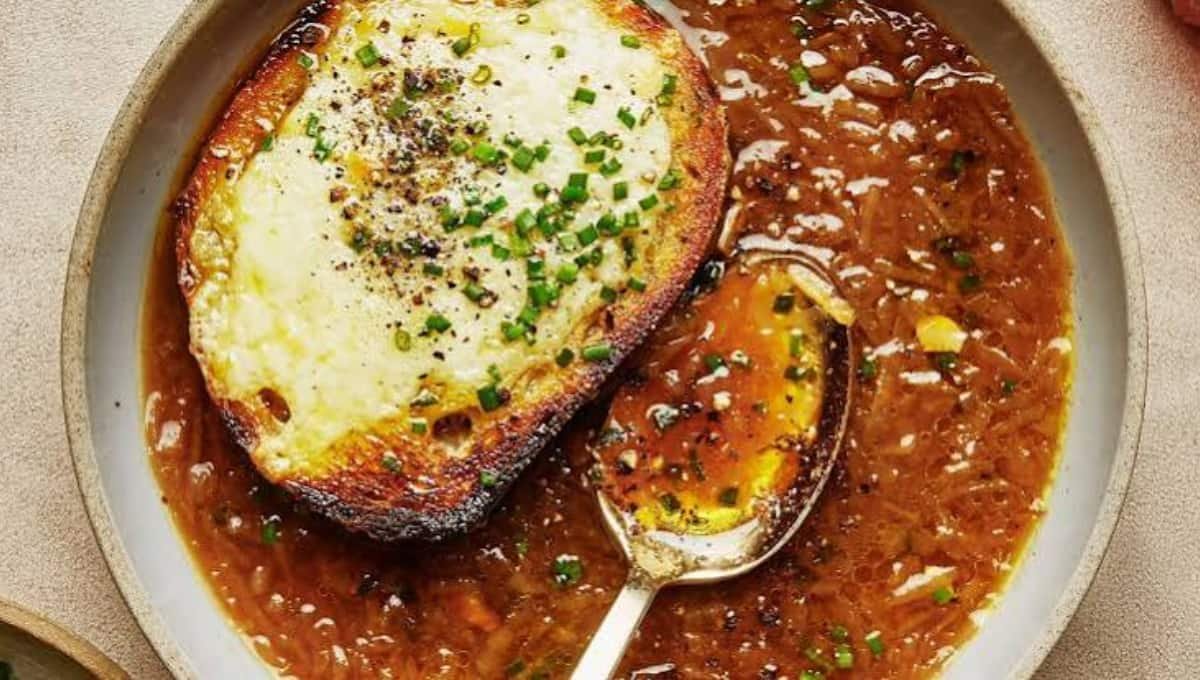
Forty-five minutes. That is the bare minimum it takes to caramelize onions properly, and any recipe promising you can do it in ten is fibbing to your face.
I learned this the hard way. My first pot of French onion soup tasted like hot onion water with a soggy raft of bread floating on top.
Silas ate two spoonfuls, said “it’s… warm,” and quietly made himself a grilled cheese. That one stung.
So I went back to the stove. Then I went back again. And again.
Here is what all those pots taught me. This soup uses a handful of cheap ingredients, and almost all of its flavor comes from one slow, patient step. Nail that step and you get a broth so deep and sweet it tastes like it simmered in a Paris bistro all night.
Then comes the cheese. A thick, crackly layer of Gruyère melted over toasted bread, browned under the broiler until it drips down the sides of the bowl.
Below is the exact method I use now. Keep an eye on the Pro Tips, because the mistake that ruins most homemade versions is sneakier than you’d expect.
Why This French Onion Soup Recipe Works
A lot of onion soup recipes rush the onions or lean on boxed broth alone. This one builds flavor in layers, so every spoonful tastes like more than the sum of its parts.
- Slow-caramelized onions bring natural sweetness and a dark, almost meaty depth.
- Dry white wine lifts all those browned bits off the pot and adds brightness.
- A splash of Worcestershire gives the beef broth a savory boost without tasting like Worcestershire.
- Double-toasted bread holds its shape under the cheese instead of turning to mush.
Side Note: This soup has working-class roots. In Paris, soupe à l’oignon gratinée was famously served around Les Halles, the huge central food market, where market workers and late-night crowds filled up on it in the early hours. Cheap onions, stale bread and a bit of cheese turned into one of the most loved dishes in the world. Not bad for leftovers.
What You’ll Need
This makes 6 servings. Total time is about 2 hours, and most of it is hands-off simmering.
| Ingredient | Amount | Why It’s Here |
|---|---|---|
| Yellow onions | 3 lb (about 6 large), thinly sliced | The star. Sweet once cooked down |
| Unsalted butter | 4 tbsp | Rich flavor for browning |
| Olive oil | 1 tbsp | Keeps the butter from scorching |
| Kosher salt | 1 tsp, plus more to taste | Pulls moisture out of the onions |
| Granulated sugar | 1/2 tsp (optional) | Gives stubborn onions a nudge |
| Garlic cloves | 3, minced | Gentle savory warmth |
| All-purpose flour | 2 tbsp | Lightly thickens the broth |
| Dry white wine | 1 cup | Deglazes the pot and adds acidity |
| Low-sodium beef broth | 6 cups | The rich base |
| Fresh thyme | 3 sprigs | Earthy, classic French flavor |
| Bay leaf | 1 | Quiet background depth |
| Worcestershire sauce | 1 tsp | Savory, umami boost |
| Black pepper | Freshly ground, to taste | A little bite |
| Baguette | 12 slices, about 1/2 inch thick | The edible lid |
| Gruyère cheese | 2 cups (8 oz), freshly grated | Nutty, melty, browns beautifully |
| Parmesan cheese | 1/4 cup, finely grated (optional) | Extra salty crunch on top |
Tools for Making French Onion Soup at Home
- Dutch oven (5 to 7 quart) or another heavy-bottomed pot
- Sharp chef’s knife and a large cutting board
- Wooden spoon for scraping up the browned bits
- Box grater for the cheese
- Measuring cups and measuring spoons
- Ladle
- Rimmed baking sheet
- 6 oven-safe soup crocks or bowls (about 12 to 16 oz each)
- Oven mitts (trust me on this one)
Read this also: Mexican Chicken Soup: The 30-Second Fix for Clear Broth
Pro Tips for Your First Pot

- Slice from root to tip, not across. Cutting the onion in half and slicing pole to pole keeps the strands intact, so they turn silky instead of collapsing into onion paste.
- Medium-low heat is your friend. This is the sneaky mistake. Crank the heat and the onions burn on the edges while staying raw in the middle, and burnt onions make the whole pot bitter. Low and slow wins every time.
- Use water to rescue the pot. When a dark brown crust builds up on the bottom, splash in 2 tablespoons of water and scrape it loose. That crust is pure flavor, so you want it back in the onions, not stuck to the pot.
- Grate your own cheese. Pre-shredded bags are coated with anti-caking powder, which stops the cheese from melting into that glossy, stretchy layer.
- Taste the broth before adding more salt. Broth, cheese and Worcestershire all bring their own salt. Season at the very end.
How to Make French Onion Soup (Step by Step)
Step 1: Slice the Onions
Cut off both ends of each onion, halve them from root to tip, and peel. Lay each half flat and slice into thin strips, about 1/8 inch thick.
Yes, your eyes will water. Chilling the onions in the fridge for 30 minutes beforehand helps a lot.
Step 2: Start the Onions Low and Covered
Melt the butter with the olive oil in your Dutch oven over medium heat. Add the onions and 1 tsp salt, and stir to coat.
The pot will look ridiculously full. Don’t panic. Cover with the lid and let them sweat for 15 minutes, stirring once halfway through.
Step 3: Caramelize Slowly
Take off the lid and turn the heat down to medium-low. Cook for 45 to 60 minutes, stirring every 5 to 10 minutes, until the onions turn a deep golden brown, like the color of a strong cup of tea.
If they look pale after 20 minutes, sprinkle in the sugar. If brown bits stick to the pot, add a splash of water and scrape.
Side Note: Those 3 pounds of onions will shrink down to roughly a quarter of their original volume. It looks like a magic trick the first time you see it.
Step 4: Add Garlic and Flour
Stir in the garlic and cook for about 1 minute, until it smells amazing. Sprinkle the flour over the onions and stir for 2 minutes to cook out the raw taste.
Step 5: Deglaze with Wine
Pour in the white wine and scrape the bottom of the pot hard with your wooden spoon. Let it bubble for 3 to 4 minutes until it reduces by about half.
Step 6: Simmer the Soup
Add the beef broth, thyme sprigs, bay leaf and Worcestershire. Bring to a boil, then lower to a gentle simmer for 30 minutes.
Fish out the thyme stems and bay leaf. Taste, then season with salt and pepper.
Step 7: Toast the Bread
While the soup simmers, heat your oven to 400°F. Lay the baguette slices on the baking sheet and bake for 6 to 8 minutes, flipping once, until dry and lightly golden.
Dry bread is the secret here. It soaks up broth slowly and keeps its structure under all that cheese.
Step 8: Broil Until Bubbly
Switch the oven to broil. Set the crocks on the baking sheet and ladle soup into each one, leaving about an inch at the top.
Float two toasts on each bowl, then pile on the Gruyère, letting some spill over the edges. Finish with a pinch of Parmesan.
Broil for 3 to 5 minutes, until the cheese bubbles and gets those gorgeous brown spots. Do not walk away. Broilers go from perfect to charcoal in about 30 seconds.
Let the bowls rest for 5 minutes before serving. The crocks are scorching, and the soup underneath is lava hot. Silas has burned the roof of his mouth on this soup more times than he’d like me to admit.
Substitutions and Variations
| Swap This | For This | What Changes |
|---|---|---|
| Yellow onions | Half yellow, half sweet or red onions | Sweeter, slightly fruitier soup |
| Dry white wine | 1/2 cup dry sherry or 1 cup extra broth plus 1 tsp apple cider vinegar | Sherry is nuttier, vinegar keeps it alcohol-free |
| Beef broth | Half beef, half chicken broth | Lighter, milder flavor |
| Gruyère | Swiss, Comté or Emmental | Similar melt, slightly different nuttiness |
| Baguette | Sourdough or ciabatta | Chewier, tangier lid |
| Fresh thyme | 1/2 tsp dried thyme | Works fine, just a bit less fragrant |
Ingredient Swaps for Different Diets
- Vegetarian: Use a rich mushroom or vegetable broth and swap the Worcestershire for 1 tsp soy sauce (most Worcestershire contains anchovies).
- Gluten-free: Skip the flour or use 1 tbsp cornstarch mixed with water, and top with gluten-free bread.
- Lighter version: Cut the butter to 2 tbsp, use 1 cup of cheese, and serve with one toast per bowl.
- Low-carb: Leave out the bread and melt the cheese straight onto the soup, or top with a crisp Parmesan wafer.
Make-Ahead Tips
This is one of those soups that tastes even better the next day. The flavors settle in and get deeper overnight.
- Caramelize the onions ahead: Cook them up to 3 days early and keep them in the fridge.
- Make the whole soup ahead: Prepare through Step 6, cool, and refrigerate for up to 4 days.
- Toast the bread ahead: Store toasted slices in an airtight container at room temperature for 2 days.
On serving day, just reheat the soup, top, and broil. Dinner in 15 minutes.
Read this also: Chicken and Rice Soup That Stays Brothy Overnight
Shave Time Off Your Cook
- Slice onions in a food processor with the slicing disc. It takes 2 minutes instead of 20.
- Caramelize a double batch and freeze half for your next pot.
- Grate the cheese and toast the bread while the onions cook, so nothing waits on you.
Leftovers and Storage
| Method | How Long | Tips |
|---|---|---|
| Fridge | Up to 4 days | Store the soup without bread or cheese in an airtight container |
| Freezer | Up to 3 months | Freeze soup only, leaving an inch of space for expansion |
| Reheat | 5 to 10 minutes | Warm on the stove over medium, then add fresh toast and cheese and broil |
Never store the soup with the bread already on top. It turns into wet sponge overnight, and nobody wants that.
Nutrition Snapshot (Per Serving)
These are approximate numbers based on 6 servings with two toasts and full cheese. Your brand of broth and bread will shift them a little.
| Nutrient | Amount |
|---|---|
| Calories | About 470 |
| Protein | About 20 g |
| Fat | About 23 g |
| Carbohydrates | About 38 g |
| Fiber | About 4 g |
| Sodium | Around 1,000 to 1,200 mg |
Using low-sodium broth makes a real difference here, since the cheese already carries plenty of salt.
What to Serve With French Onion Soup
- Crisp green salad with a sharp Dijon vinaigrette to cut through the richness
- Roast chicken for a cozy bistro-style dinner
- A simple steak with roasted potatoes on special nights
- Roasted Brussels sprouts or green beans with lemon
- A glass of the same dry white wine you cooked with
FAQs Related to French Onion Soup
1. Why does my French onion soup taste bland?
Usually the onions weren’t cooked long enough or the soup needs salt. Deep brown onions and a final taste-and-season step fix most bland pots. A tiny splash of sherry vinegar at the end can wake it right up.
2. Can I make French onion soup without wine?
Yes. Replace the wine with extra broth and a teaspoon of apple cider vinegar or lemon juice. You’ll still get that bright, balanced flavor.
3. What is the best cheese for French onion soup?
Gruyère is the classic pick because it melts smoothly and browns well. Comté, Emmental and Swiss cheese are all great stand-ins.
4. Why are my onions burning instead of caramelizing?
The heat is too high. Lower it to medium-low, add a splash of water, and scrape the pot. Caramelizing needs time more than heat.
5. Can I make French onion soup in a slow cooker?
You can caramelize the onions in a slow cooker on low for about 8 to 10 hours with the lid slightly cracked. They’ll be soft and golden, though a little less dark than stovetop onions. Then finish the soup on the stove.
6. Can I use regular bowls instead of crocks?
Only if they are clearly marked oven-safe. If not, broil the cheese onto the toast slices on a baking sheet and float them on the soup right before serving.
Conclusion
French onion soup proves that a bag of onions and some patience can beat almost any fancy dish. It asks for your time, not your skill.
Put on a podcast, give the pot a stir every few minutes, and let your kitchen fill with that sweet, buttery smell. By the time the cheese hits the broiler, everyone in the house will be hovering. Silas now stands next to the oven like a golden retriever waiting for a treat.
Give this recipe a try this week, then come back and tell me how it went in the comments. Did your onions take longer than you expected? Did you try a different cheese? Drop your questions below too, and I’ll help you troubleshoot your next pot.