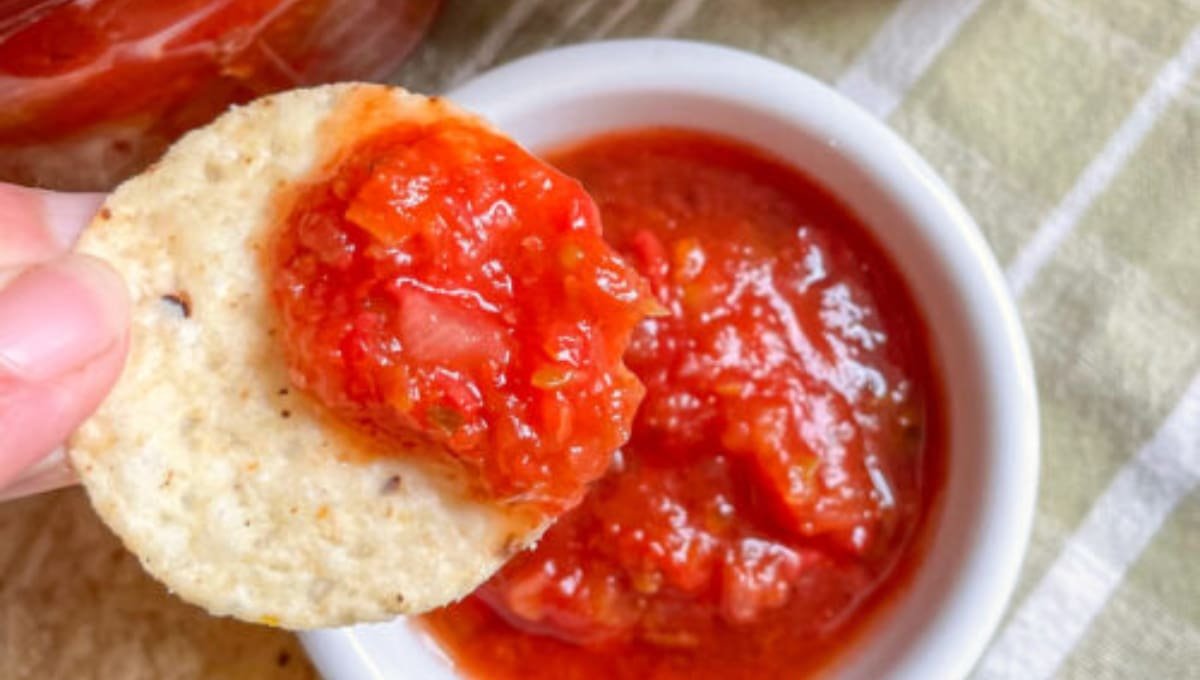
Fresh Tomato Canned Salsa Recipe: Every year around late August, my kitchen counter turns into a tomato jungle. Silas walks in, sees the boxes piled up, and just says “salsa season” like it’s a holiday. Honestly, at this point, it kind of is.
I started canning salsa a few summers ago after a neighbor handed me a jar of hers and I nearly cried over how good it was. I begged for the recipe, tweaked it about a dozen times, and now this version lives in my pantry from September all the way through winter.
What I love most about canned salsa is that it’s nothing like the stuff from a jar at the store. It’s chunky, it’s fresh, and it tastes like actual tomatoes instead of vinegar and salt. Once you make a batch, store bought salsa just doesn’t hit the same.
Side Note: If you’ve never canned anything before, don’t panic. This recipe is one of the easier ones to start with, and I’ll walk you through every step.
This recipe makes about 7 pint jars, and honestly, that’s never enough. I usually double it, because between gifting a few jars to neighbors and Silas sneaking spoonfuls straight from the pot before it even cools, half of it disappears before winter even shows up.
There’s also something really satisfying about canning your own food. It’s one of those old school skills that feels kind of impressive once you actually try it, even though it’s a lot more approachable than people think.
What You’ll Need
Here’s everything that goes into the pot. Fresh, ripe tomatoes really do make or break this recipe, so don’t skip the good ones just because it’s more chopping.
| Ingredient | Amount |
|---|---|
| Fresh tomatoes, cored and diced | 7 pounds |
| Onions, finely chopped | 2 cups |
| Green bell peppers, diced | 1 ½ cups |
| Jalapeños, seeded and minced | 1 cup (adjust for heat) |
| Garlic cloves, minced | 5 |
| Apple cider vinegar (5% acidity) | ¾ cup |
| Tomato paste | 2 small cans (6 oz each) |
| Fresh cilantro, chopped | ½ cup |
| Ground cumin | 1 tablespoon |
| Salt | 1 tablespoon |
| Black pepper | 1 teaspoon |
| Sugar | 1 teaspoon (optional) |
Side Note: The vinegar isn’t just for flavor here. It’s what keeps the salsa safe for canning, so don’t reduce the amount, even if you think it tastes too tangy on its own. It mellows out once everything cooks together.
Read this also: 15 Keto Fast Food Hacks That Beat the Drive-Thru
Tools You’ll Need
- Large stockpot
- Water bath canner (or a big pot with a rack)
- 7 pint-sized canning jars with new lids and bands
- Jar lifter
- Canning funnel
- Ladle
- Clean kitchen towels
- Small bubble remover or a plastic chopstick
Pro Tips
1. Don’t skip the tomato paste. Fresh tomatoes release a lot of water as they cook, and the paste thickens everything up so your salsa isn’t watery and sad.
2. Blanch your tomatoes first. Drop them in boiling water for 30 seconds, then straight into an ice bath. The skins slide right off, and trust me, you don’t want tomato skin bits in your finished salsa.
3. Taste before you can it. This is your only chance. Once it’s sealed, you’re committing to that flavor for months.
4. Keep your ratios close to the recipe. Canning salsa isn’t the place to freestyle with extra peppers or less vinegar. The acidity levels matter for safety, not just taste.
5. Sterilize your jars properly. Run them through a hot dishwasher cycle or boil them for 10 minutes before filling. Skipping this step is how salsa goes bad in storage.
6. Work in batches if your tomatoes are extra juicy. Some tomato varieties release way more liquid than others. If your salsa looks soupy after simmering, just let it cook a bit longer instead of adding more paste.
How to Make Canned Salsa
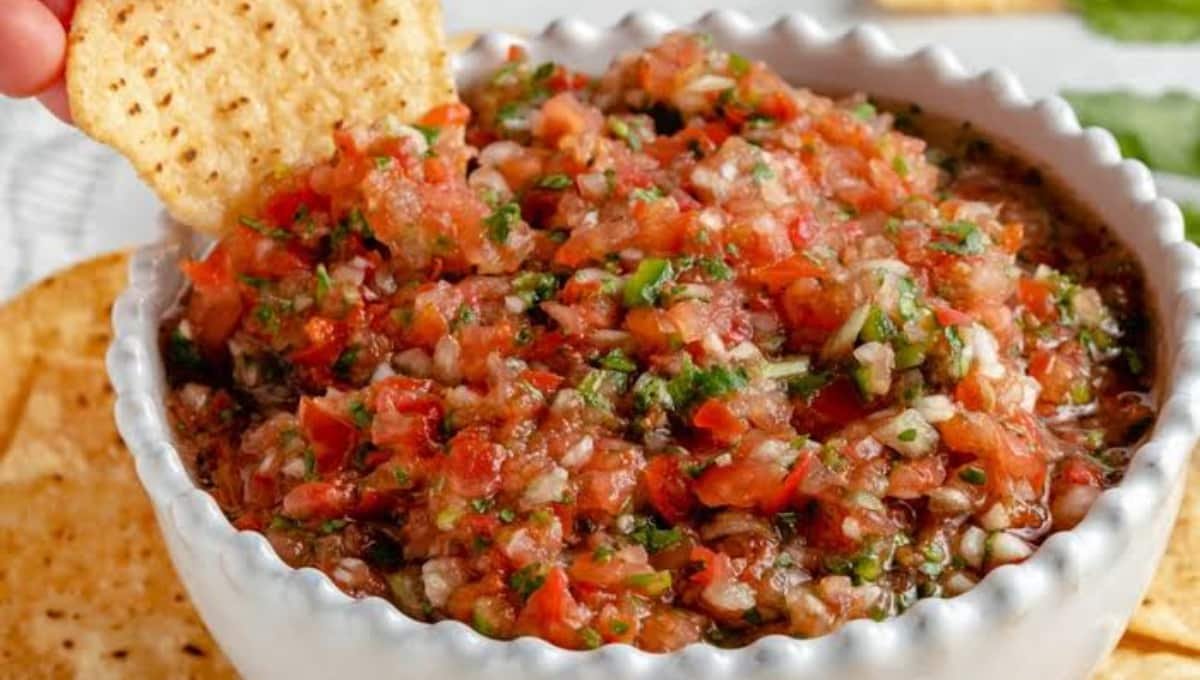
Step 1: Prep the tomatoes
Blanch and peel your tomatoes using the method above. Once peeled, dice them up and set them in a large bowl.
Step 2: Combine everything in the pot
Add your diced tomatoes, onions, bell peppers, jalapeños, and garlic into a large stockpot. Stir in the tomato paste, vinegar, cumin, salt, and pepper.
Step 3: Simmer it down
Bring the mixture to a boil, then reduce the heat and let it simmer uncovered for about 20 to 25 minutes. You’re waiting for it to thicken up and for the flavors to actually blend together.
Side Note: Stir it every few minutes so nothing sticks or scorches on the bottom. Burnt salsa is not a flavor anyone is looking for.
Step 4: Stir in the cilantro
Once your salsa has thickened, take it off the heat and stir in the fresh cilantro. Adding it now keeps that bright, herby flavor instead of it cooking away.
Step 5: Fill your jars
Using your canning funnel and ladle, fill each sterilized jar with hot salsa, leaving about ½ inch of headspace at the top.
Step 6: Remove air bubbles
Run your bubble remover (or chopstick) around the inside of the jar to release trapped air pockets. Wipe the rims clean with a damp towel so the lids seal properly.
Step 7: Seal and process
Place the lids on and screw the bands on until fingertip tight. Lower the jars into your water bath canner, making sure they’re fully covered by at least an inch of water.
Process pint jars for 15 minutes (add more time if you’re at a higher altitude).
Step 8: Cool and check the seal
Carefully remove the jars with your jar lifter and set them on a towel, undisturbed, for 24 hours. You’ll hear a satisfying pop as each lid seals. Any jars that don’t seal should go straight into the fridge and get eaten first.
Read this also: Hash Brown Breakfast Casserole Everyone Will Crave
Substitutions and Variations
| Original | Swap Option |
|---|---|
| Green bell pepper | Poblano pepper for smokier flavor |
| Jalapeño | Serrano pepper for more heat |
| Apple cider vinegar | White distilled vinegar (same acidity) |
| Fresh cilantro | Leave out if you’re not a cilantro person |
| Regular tomatoes | Roma tomatoes for less watery salsa |
Side Note: If someone in your house genuinely hates cilantro (Silas is on this team, for the record), you can leave it out completely without messing with the canning safety.
Make Ahead Tips
This whole recipe is basically a make ahead recipe by design. Once it’s sealed and processed properly, sealed jars last up to a year stored in a cool, dark pantry.
If you want to prep ahead of canning day, you can chop and store your onions, peppers, and garlic in the fridge a day early. Just keep the tomatoes fresh until you’re ready to blanch them.
Leftovers and Storage
Unopened, properly sealed jars store well in a cool pantry for up to 12 months.
Once you open a jar, keep it in the fridge and use it within 7 to 10 days.
Side Note: Never store canned salsa at room temperature after opening, even if it looks and smells fine. It’s just not worth the risk.
Nutritional Snapshot (Per ¼ Cup Serving)
| Nutrient | Amount |
|---|---|
| Calories | 20 |
| Carbohydrates | 4g |
| Sugar | 2g |
| Fiber | 1g |
| Sodium | 190mg |
| Protein | 1g |
Meal Pairings
This salsa isn’t just for chips, even though it’s incredible with them. Here are a few of my favorite ways to use it:
- Spooned over scrambled eggs or breakfast tacos
- Mixed into ground beef or chicken for taco night
- Stirred into rice for an easy side dish
- Topped on grilled chicken or fish
- Swirled into guacamole for extra flavor
FAQs Related to Fresh Tomato Salsa Recipe
1. Can I use canned tomatoes instead of fresh?
You can, but the texture and flavor won’t be the same. Fresh tomatoes give this salsa that bright, chunky quality that canned tomatoes just can’t replicate.
2. Do I need a pressure canner for this recipe?
No. Since this salsa has enough acid from the vinegar, a water bath canner works perfectly fine and is safe.
3. Why did some of my jars not seal?
This usually happens if there’s leftover residue on the jar rim or if the lid wasn’t tightened correctly. Just refrigerate those jars and use them within a week or two.
4. How spicy is this salsa?
With one cup of jalapeños, it lands somewhere in the mild to medium range. Add more jalapeños or a serrano pepper if you want it spicier.
5. Can I freeze salsa instead of canning it?
Yes, if you’d rather skip canning altogether. Just leave about an inch of headspace in freezer safe containers and it’ll keep for up to 6 months.
6. Why is my salsa watery even after simmering?
This usually means your tomatoes were extra juicy, or it didn’t simmer long enough. Let it cook a little longer uncovered so more liquid can evaporate before you jar it up.
7. Can I double this recipe?
Absolutely, and I almost always do. Just make sure your pot is large enough to hold everything comfortably, since it needs room to simmer without boiling over.
Conclusion
There’s nothing quite like opening your pantry in the middle of winter and pulling out a jar of salsa you made yourself back in August. It tastes like summer, and honestly, it makes you feel a little bit like you have your life together, even on the days you really don’t.
If you try this recipe, come back and tell me how it turned out. I’d love to know if you added extra heat, swapped in a different pepper, or if Silas approved of the no cilantro version like he always does.