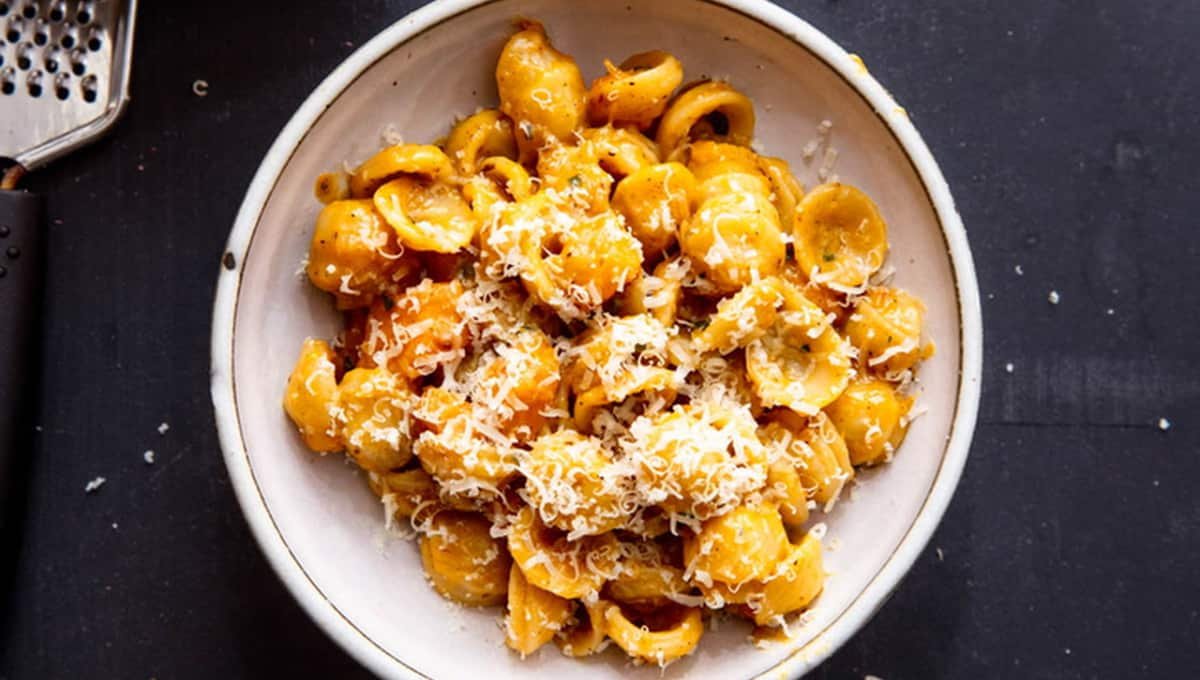
I did not expect a vegetable to change how I feel about pasta night, but here we are. A friend handed me a container of this butternut squash pasta sauce last October and I remember standing at my counter eating it straight off a spoon before it even touched noodles. It’s that good.
It’s creamy without a drop of heavy cream. It’s sweet, a little nutty, and it clings to every noodle instead of pooling at the bottom of the bowl like some sauces do.
And the best part isn’t even the taste. It’s how forgiving this recipe is. Burn the garlic a little? Still works. Forget the sage? Still works. Use pre-cubed squash because you’re not in the mood to fight a vegetable with a knife? Also still works.
Side Note: If you’re someone who normally reaches for jarred marinara out of habit, this recipe is a genuinely easy way to break that pattern without adding thirty minutes to your night.
Why This Sauce Works So Well
Butternut squash has this natural sweetness that mellows out once it’s roasted or simmered, and that sweetness is exactly what makes the sauce taste rich even though there’s barely any dairy in it.
Blend it with a little broth, garlic, and parmesan, and you get something that tastes like it took hours. It didn’t.
Most cream-based pasta sauces get their richness from butter and heavy cream doing all the work. This one gets it from the squash itself, which means you can lighten it up without the sauce turning watery or bland. That’s rare for a sauce this indulgent tasting.
There’s also something nice about a vegetable-forward sauce that doesn’t taste like you’re eating something virtuous. Nobody at my table has ever guessed that squash was the main ingredient until I told them.
Read this also: Air Fryer Grilled Cheese Trick No One Told You About
What You’ll Need
| Ingredient | Amount | Notes |
|---|---|---|
| Butternut squash | 1 medium (about 3 lbs) | Peeled and cubed |
| Olive oil | 3 tbsp | Divided |
| Yellow onion | 1 small | Diced |
| Garlic cloves | 4 | Minced |
| Vegetable broth | 1 ½ cups | Or chicken broth |
| Heavy cream or whole milk | ¼ cup | Optional, for extra richness |
| Parmesan cheese | ½ cup, grated | Plus more for topping |
| Fresh sage leaves | 6 to 8 | Or 1 tsp dried |
| Nutmeg | ⅛ tsp | Freshly grated if you have it |
| Salt and black pepper | To taste | |
| Pasta of choice | 1 lb | Rigatoni, penne, or pappardelle work great |
Tools You’ll Need
- Baking sheet
- Sharp knife and cutting board
- Large pot for pasta
- Large skillet or saucepan
- Blender or immersion blender
Pro Tips
Here’s what I’ve learned after making this sauce more times than I can count.
Roast the squash instead of boiling it. Boiling waters down the flavor. Roasting concentrates the natural sugars and gives you a deeper, more caramelized taste.
Save a cup of pasta water before draining. This sauce thickens fast, and pasta water is the easiest way to loosen it back up without watering down the flavor.
Don’t skip the nutmeg. It sounds like a strange addition to a savory sauce, but it’s the ingredient that makes people ask what your secret is.
Fry the sage in butter if you have a few extra minutes. Crispy sage on top turns this from a weeknight dinner into something that looks like it belongs on a restaurant menu.
Blend it smooth, then thin it out. A thick puree first, followed by broth added slowly, gives you way more control over the final texture than dumping everything in the blender at once.
Salt the squash before roasting, not after. Salting early helps pull out moisture, which gives you better caramelization and a deeper flavor once it hits the blender.
Taste as you go. Roasted squash varies a lot depending on how ripe it was, so the amount of salt, pepper, and nutmeg you need can shift from batch to batch. Don’t just measure blindly and call it done.
How to Make Butternut Squash Pasta Sauce
Step 1: Roast the squash. Preheat your oven to 400°F. Toss the cubed squash with 2 tablespoons of olive oil, salt, and pepper. Spread it on a baking sheet in a single layer and roast for 25 to 30 minutes, until fork tender and lightly caramelized at the edges.
Step 2: Cook the aromatics. While the squash roasts, heat the remaining tablespoon of olive oil in a large skillet over medium heat. Add the onion and cook for 4 to 5 minutes, until soft. Add the garlic and cook for another 30 seconds, just until fragrant.
Step 3: Boil the pasta. Bring a large pot of salted water to a boil and cook your pasta according to the package directions. Save a cup of the pasta water before draining.
Step 4: Blend the sauce. Add the roasted squash, cooked onion and garlic, broth, sage, and nutmeg to a blender. Blend until completely smooth. If your blender is small, work in batches.
Step 5: Finish it on the stove. Pour the blended sauce back into the skillet over low heat. Stir in the parmesan and cream if using. Taste and adjust the salt, pepper, and nutmeg.
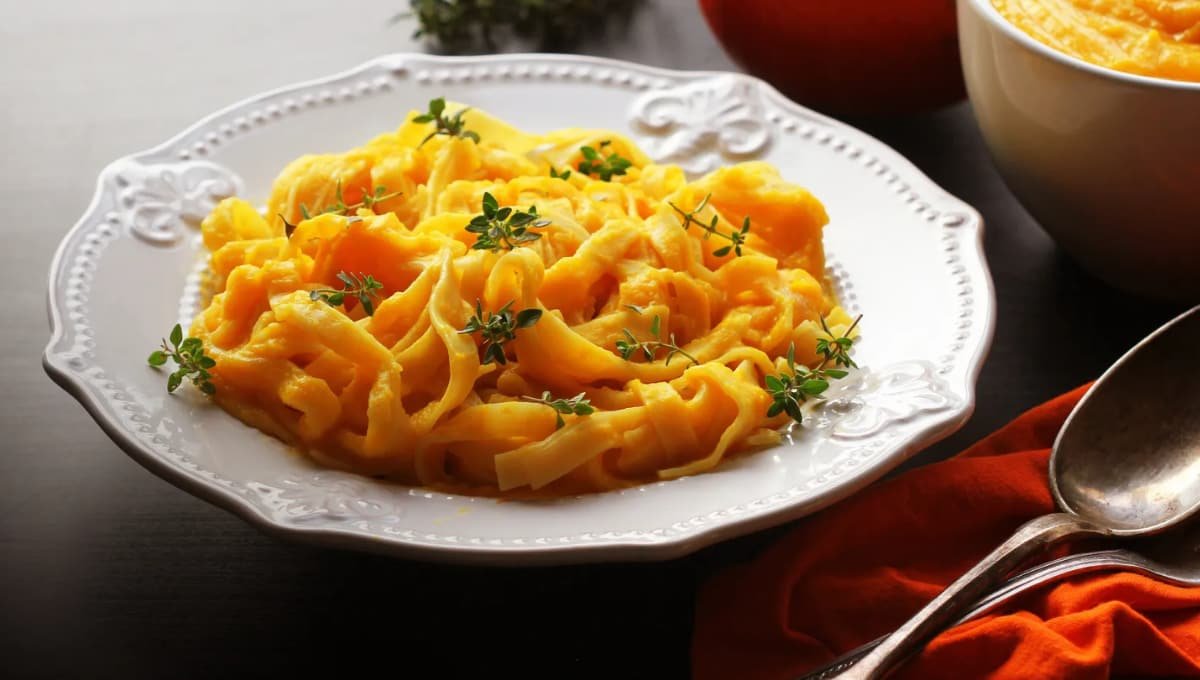
Step 6: Combine and serve. Add the drained pasta directly into the skillet and toss to coat, adding splashes of reserved pasta water until the sauce clings to every noodle. Top with extra parmesan and crispy sage if you made it.
Read this also: Air Fryer Cheese Toast You’ll Crave!
Substitutions and Variations
<strong>Not everyone has the same ingredients on hand</strong>, so here’s how to adjust this recipe without losing what makes it good.
| Original | Substitute | Notes |
|---|---|---|
| Butternut squash | Pumpkin puree | Use 3 cups, skip roasting step |
| Heavy cream | Coconut milk | Adds slight sweetness, dairy-free |
| Parmesan | Nutritional yeast | For a dairy-free version |
| Fresh sage | Fresh thyme or rosemary | Different but still cozy |
| Pasta | Gnocchi | Same sauce, different vibe entirely |
Want it spicier? Add a pinch of red pepper flakes when you cook the onion.
Want it extra creamy? Stir in an additional two tablespoons of cream at the end, off heat.
Make Ahead Tips
This sauce is one of the easiest things to prep in advance.
Make the sauce up to 3 days ahead and store it in the fridge in an airtight container. When you’re ready to eat, reheat it on the stove over low heat and cook your pasta fresh.
You can also freeze the sauce on its own for up to 3 months. Thaw it overnight in the fridge before reheating.
Leftovers and Storage
Store leftover pasta with sauce in an airtight container in the fridge for up to 4 days.
Reheat on the stove over low heat with a splash of broth or water, stirring often. The sauce tends to thicken in the fridge, so don’t skip that splash of liquid.
Freezing tip: Freeze the sauce separately from the cooked pasta if you can. Cooked noodles get mushy after freezing, but the sauce holds up beautifully on its own.
Meal Pairings
This sauce pairs well with a simple green salad and a crusty piece of bread for soaking up whatever’s left in the bowl.
If you want to add protein, grilled chicken, crispy pancetta, or Italian sausage all work well stirred in at the end.
For a lighter meal, skip the pasta entirely and spoon the sauce over roasted vegetables or use it as a base for a grain bowl with farro or quinoa. It also works surprisingly well as a dip for warm, crusty bread if you’re serving it as a starter.
A crisp white wine like a pinot grigio or a dry riesling balances the sweetness of the squash nicely if you’re turning this into a full dinner spread.
Nutritional Snapshot
Here’s a general estimate per serving, based on four servings total with 1 lb of pasta.
| Nutrient | Approximate Amount |
|---|---|
| Calories | 420 |
| Protein | 13g |
| Carbohydrates | 62g |
| Fat | 14g |
| Fiber | 5g |
Actual numbers will vary depending on the pasta and dairy you choose.
FAQs Related to Butternut Squash Pasta Sauce
1. Can I make this sauce without a blender?
Yes. Mash the roasted squash by hand with a potato masher for a rustic, slightly chunky texture instead of a completely smooth one.
2. Is this sauce vegan?
It can be. Skip the cream and parmesan, or use dairy-free versions of both, and it comes together just as well.
3. Can I use frozen butternut squash?
Yes. Roast it straight from frozen, but add a few extra minutes to the cook time since it holds more moisture.
4. Why is my sauce too thick?
It’s the pasta water. Add a splash at a time until it loosens back up to the texture you want.
5. Can I use canned pumpkin instead of squash?
You can, and it saves a step. Just make sure it’s plain pumpkin puree, not pumpkin pie filling.
6. Can I make this ahead for a dinner party?
Yes, and honestly it tastes even better the next day once the flavors have had time to settle. Just reheat gently and cook your pasta fresh right before serving.
7. What pasta shape works best?
Anything with ridges or curves holds onto this sauce well. Rigatoni, penne, and pappardelle are all great choices. I’d avoid thin noodles like angel hair since the sauce is on the heavier side.
Conclusion
This is one of those recipes that quietly earns a permanent spot in your rotation. It’s cozy, it’s simple, and it makes pasta night feel like more effort than it actually was.
If you make this butternut squash pasta sauce, come back and leave a comment letting me know how it turned out. And if you tried a substitution or added your own twist, I’d genuinely love to hear about it.