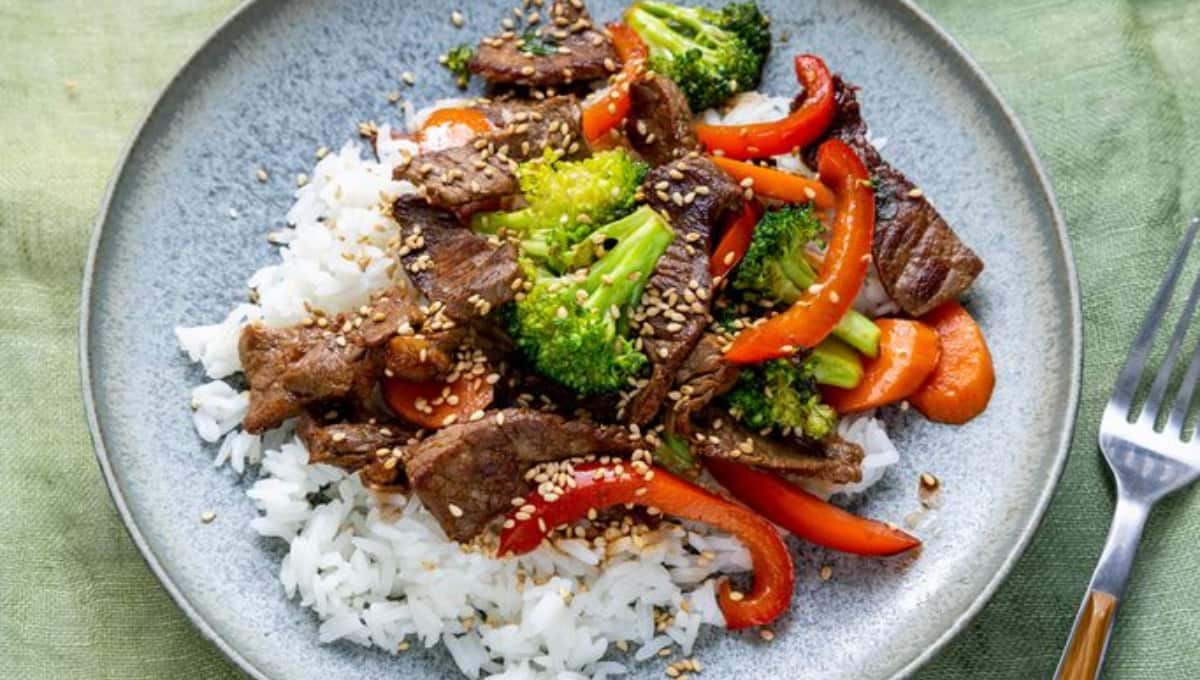
Silas asked me last week why we don’t order Chinese takeout anymore. My answer was simple. This beef stir fry beats every delivery app in our neighborhood, and it lands on the table faster than the guy on the bike would even leave the restaurant.
I used to think stir fry was one of those “restaurant only” dishes. Too fussy. Too many steps. Then I actually made it once and realized the whole thing comes together in one pan, in under half an hour, using ingredients I already had in my fridge.
The beef comes out tender, not chewy. The sauce is glossy and a little sweet, a little savory, with just enough garlic to make the whole kitchen smell incredible. And the vegetables still have crunch, because nobody wants a plate of mushy broccoli.
What sold me on making stir fry at home was realizing how much better fresh beef tastes than whatever gets tossed together in a takeout container after sitting in a bag for a 20 minute drive. Fresh off the stove, this stir fry is loud with flavor. The garlic and ginger hit you first, then the sweetness from the sauce, then that little kick of sesame at the very end.
My kids weren’t sure about it the first time I made it. Now they ask for it by name, and Silas has started requesting it over actual restaurant food, which honestly still surprises me a little.
This is officially a weeknight staple in our house now. Let’s get into it.
Why This Beef Stir Fry Works
The secret is a two-part trick most home cooks skip. First, a quick beef marinade with cornstarch tenderizes the meat and helps the sauce cling to every bite. Second, cooking in batches instead of dumping everything in the pan at once keeps the beef from steaming instead of searing.
That’s really it. No fancy wok required. No obscure ingredients hiding at the back of an Asian grocery store you’ve never visited. Just smart technique and a sauce that pulls double duty as both marinade and glaze.
There’s also the matter of timing. Stir fry recipes fall apart when everything is cooked at once and left to sit while you scramble to plate it. The moment the sauce hits the hot pan, the whole dish comes together in under two minutes. So the real key is having every single ingredient prepped and within arm’s reach before you even turn the burner on.
I also like that this recipe doesn’t demand a giant grocery list. Everything here is something you can grab from a regular grocery store, no specialty aisle required. That’s a big reason it’s become such a regular dinner in our rotation instead of a once-in-a-while treat.
Read this also: Steak Dinner Ideas Your Whole Family Will Fight Over in 2026
What You’ll Need
| Ingredient | Amount |
|---|---|
| Flank steak or sirloin, thinly sliced against the grain | 1 pound |
| Cornstarch | 2 tablespoons, divided |
| Soy sauce | 1/3 cup, divided |
| Beef broth | 1/2 cup |
| Brown sugar | 2 tablespoons |
| Garlic, minced | 3 cloves |
| Fresh ginger, grated | 1 tablespoon |
| Sesame oil | 1 teaspoon |
| Vegetable oil | 3 tablespoons, divided |
| Broccoli florets | 2 cups |
| Red bell pepper, sliced | 1 medium |
| Carrots, thinly sliced | 1 cup |
| Green onions, chopped | 3, for garnish |
| Sesame seeds | 1 teaspoon, for garnish |
Side Note: Sirloin is cheaper and works just as well as flank steak here. Just make sure you slice it thin, and always against the grain, or it will chew like a rubber band no matter how good your sauce is.
Tools You’ll Need
- Large skillet or wok
- Sharp knife for thin slicing
- Mixing bowls
- Measuring cups and spoons
- Tongs or a spatula
Pro Tips
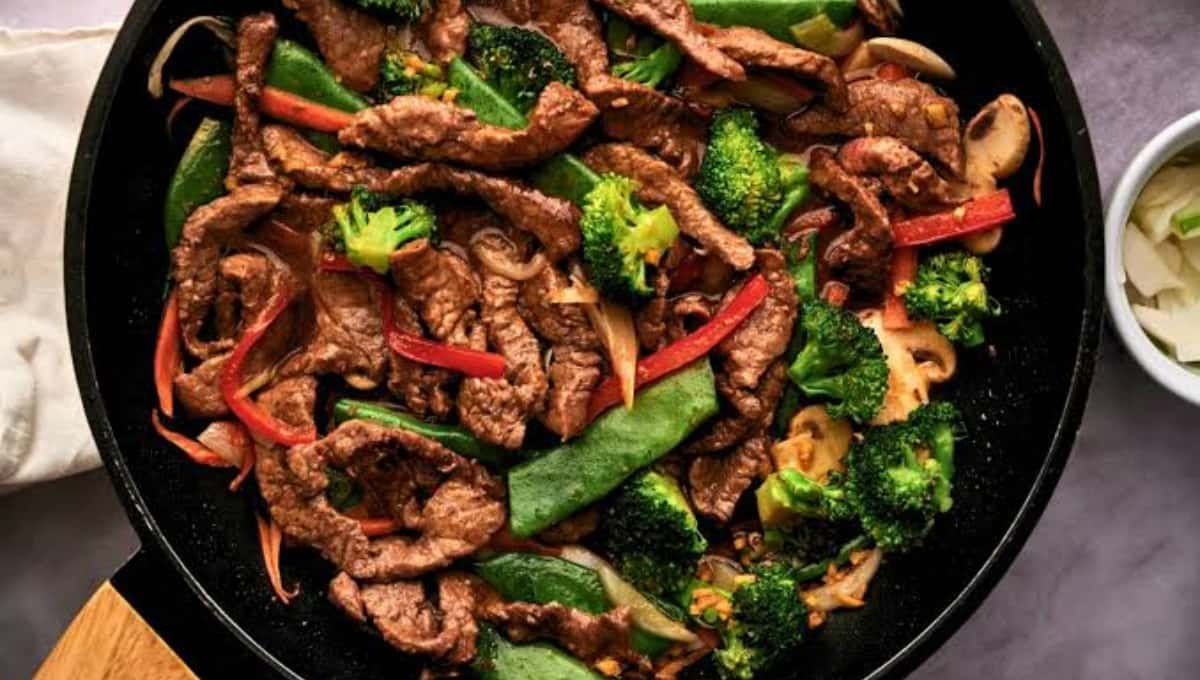
These are the small details that separate a good stir fry from a great one. I learned most of these the hard way.
- Slice the beef partially frozen. Pop it in the freezer for 15 minutes before cutting. It firms up the meat and makes those paper-thin slices so much easier to achieve.
- Don’t crowd the pan. Cook the beef in two batches. A crowded pan traps steam, and steam is the enemy of that beautiful brown sear you want.
- Prep everything before you start cooking. Stir fry moves fast once the heat is on. Have your sauce mixed, your veggies chopped, and your beef sliced before the pan even gets hot.
- Get the pan smoking hot first. A hot pan is what gives you that slightly charred, restaurant-style flavor. A lukewarm pan just gives you soggy beef.
- Add the sauce last. Let the beef and veggies cook first, then pour the sauce in at the end so it thickens quickly without overcooking anything.
- Taste before you plate. Every soy sauce brand has a different sodium level, so give the sauce a quick taste right before serving. A splash more broth mellows it out if it tastes too salty.
How to Make Beef Stir Fry
Step 1: Marinate the Beef
In a bowl, toss the sliced beef with 1 tablespoon cornstarch and 2 tablespoons soy sauce. Let it sit for 10 minutes while you prep the vegetables. This step alone is what makes the beef so tender.
Step 2: Mix the Sauce
In a separate bowl, whisk together the beef broth, remaining soy sauce, brown sugar, garlic, ginger, sesame oil, and remaining cornstarch. Set it aside. This sauce is doing all the heavy lifting for flavor, so don’t skip any part of it.
Step 3: Sear the Beef
Heat 2 tablespoons vegetable oil in your skillet over high heat. Add the beef in a single layer, working in two batches if needed. Sear for 1 to 2 minutes per side until browned. Remove and set aside.
Step 4: Stir Fry the Vegetables
Add the remaining oil to the same pan. Toss in the broccoli, bell pepper, and carrots. Stir fry for 3 to 4 minutes until they’re crisp but starting to soften at the edges.
Step 5: Bring It All Together
Return the beef to the pan with the vegetables. Pour in the sauce and stir constantly. It will thicken within a minute or two, coating everything in that glossy, savory glaze.
Step 6: Garnish and Serve
Sprinkle with green onions and sesame seeds. Serve immediately over rice or noodles while it’s hot and the sauce is still glossy.
Read this also: The Sourdough Mini Loaf Secret Nobody Tells Beginners
Substitutions and Variations
| Original | Swap |
|---|---|
| Flank steak | Sirloin, skirt steak, or thinly sliced chicken thigh |
| Soy sauce | Tamari for gluten-free, or coconut aminos for soy-free |
| Brown sugar | Honey or a low-carb sweetener for a keto-friendly version |
| Broccoli, peppers, carrots | Snap peas, mushrooms, zucchini, or baby corn |
| Vegetable oil | Avocado oil for a higher smoke point |
If you’re feeding picky eaters, cut the vegetables smaller so they blend into the sauce without anyone noticing. Silas still hasn’t caught on.
Make Ahead Tips
You can slice the beef and mix the sauce up to a day ahead. Store them separately in the fridge, covered. When it’s time to cook, everything comes together in the same 20 minutes, just with less prep work standing between you and dinner.
Storage and Leftovers
Leftovers keep well in an airtight container in the fridge for up to 4 days. Reheat in a hot skillet for a couple of minutes rather than the microwave, since the pan brings back that seared texture the microwave tends to steam away.
This stir fry also freezes surprisingly well for up to 2 months. Thaw it overnight in the fridge before reheating.
Nutritional Snapshot
| Per Serving (approx.) | Amount |
|---|---|
| Calories | 320 |
| Protein | 28g |
| Carbohydrates | 18g |
| Fat | 14g |
| Fiber | 3g |
Numbers will shift depending on your exact cuts of beef and how much sauce you use. This is based on four servings without rice or noodles.
What to Serve With Beef Stir Fry
- Steamed jasmine rice or brown rice
- Lo mein or rice noodles
- Cauliflower rice for a low-carb plate
- A side of egg drop soup or spring rolls for a full takeout-style spread
FAQs Related to Beef Stir Fry Beats
1. What is the best cut of beef for stir fry?
Flank steak and sirloin are the most popular choices because they’re affordable and stay tender when sliced thin against the grain.
2. Why is my beef stir fry tough?
Tough beef usually means it was sliced with the grain instead of against it, or the pan wasn’t hot enough and the meat steamed instead of seared.
3. Can I make beef stir fry without cornstarch?
Cornstarch is what gives the sauce its glossy, clingy texture. Arrowroot powder works as a direct substitute if you don’t have cornstarch on hand.
4. Is beef stir fry healthy?
It’s packed with protein and vegetables, making it a fairly balanced meal, especially when you control the sodium and sugar in the sauce.
5. How do I keep the vegetables crunchy?
Cook them over high heat for a short amount of time and add them after the beef. Overcooking is the main reason vegetables turn mushy in a stir fry.
6. Can I use frozen vegetables instead of fresh?
Yes, though fresh vegetables give a crisper texture. If using frozen, thaw and pat them dry first, since extra moisture can water down the sauce.
7. What can I use instead of rice or noodles?
Cauliflower rice, zucchini noodles, or even a bed of shredded lettuce all work well if you want a lighter, lower-carb base for the stir fry.
Wrapping Up
This beef stir fry has officially replaced our Friday takeout order, and honestly, it might replace yours too. It’s fast, it’s saucy, and it tastes like something you’d pay double for at a restaurant.
Give it a try this week and let me know how it turned out in the comments. Did you switch up the vegetables? Try a different cut of beef? I’d love to hear how you made this recipe your own.