
Last summer, Silas and I spent nine days in Crete, and I came home a completely different person about salad. Before that trip, salad was the thing I ate because I felt guilty about the pasta. After that trip, salad became the thing I actually craved.
We ate this exact Greek salad at a tiny taverna with plastic chairs and a view of the harbor, and I made Silas order it three separate times that week. By day nine, he finally admitted it was better than the bread.
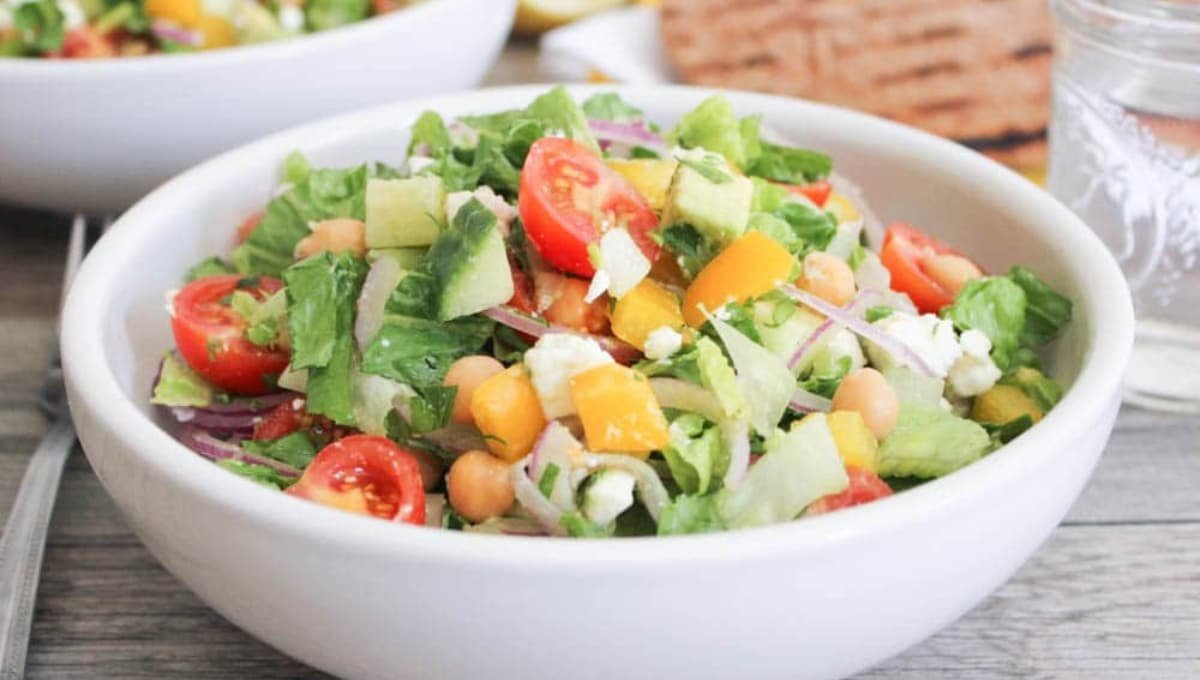
This version is the one I’ve made probably forty times since we got back. No lettuce. No lemon juice. No fussy dressing shaken up in a jar. Just ripe tomatoes, cucumber, red onion, olives, and a big slab of feta doing exactly what it’s supposed to do.
Side Note: The biggest mistake people make with Greek salad is treating it like a garden salad with feta sprinkled on top. That’s not it. This is a tomato and cucumber salad that feta happens to sit on. Big difference.
I used to think Greek salad was a summer side dish, something you throw together in five minutes because you feel bad about not eating enough vegetables. Now I make it as an actual meal, especially on nights when it’s too hot to think about turning on the stove.
The other thing I learned in Crete is that good Greek salad doesn’t rely on a fancy dressing. There’s no garlic, no lemon, no Dijon mustard hiding in there. Just olive oil, a splash of vinegar, and oregano. The vegetables are doing all the heavy lifting, so buying good tomatoes actually matters here.
What You’ll Need
| Ingredient | Amount |
|---|---|
| Ripe tomatoes | 4 large, cut into wedges |
| English cucumber | 1 large, sliced into half moons |
| Red onion | ½, thinly sliced |
| Kalamata olives | ½ cup, pitted |
| Green bell pepper | 1, sliced into rings |
| Block feta cheese | 6 oz, one thick slab |
| Extra virgin olive oil | ¼ cup |
| Red wine vinegar | 1 tablespoon |
| Dried oregano | 1 teaspoon, plus more for topping |
| Sea salt | ½ teaspoon |
| Black pepper | ¼ teaspoon |
That’s genuinely the whole list. No fancy substitutions needed to make this taste like a Greek island in September.
Read this also: The Meal Prep Formula That Saved My Weeknights
Tools You’ll Need
- Sharp chef’s knife
- Cutting board
- Large serving bowl
- Small whisk or fork for the dressing
- Measuring spoons
Pro Tips
1. Salt your tomatoes and cucumbers first, separately, for 10 minutes. This pulls out excess water so your salad doesn’t turn into tomato soup at the bottom of the bowl. Drain that liquid before combining.
2. Buy the block of feta, never the crumbled kind. Crumbled feta is dry and dusty because it’s coated in cellulose to keep the pieces from sticking. A fresh block, packed in brine, has a completely different texture.
3. Let the salad sit for 10 minutes before serving. The flavors need a minute to mingle. I know it’s tempting to dig in right away, but that short rest makes a real difference.
4. Don’t refrigerate the tomatoes beforehand. Cold tomatoes lose flavor. Keep them on the counter until you’re ready to slice.
5. Use whole olives with pits if you can find them. They taste noticeably fresher than pre-pitted ones, which tend to sit in brine longer and lose some bite.
I learned most of these the hard way, mostly by serving Silas a soggy, watery version of this salad the first few times I tried making it at home. He never complained, but I could tell the difference between that first attempt and the one I make now.
Step-by-Step Instructions
Step 1: Prep the vegetables. Cut the tomatoes into wedges and the cucumber into half moons. Place them in a colander with a pinch of salt and let them drain for 10 minutes while you prep everything else.
Step 2: Slice the onion and pepper. Thinly slice the red onion so it doesn’t overpower every bite. Cut the green pepper into rings or half rings, whichever you find easier to eat.
Step 3: Combine in a large bowl. Add the drained tomatoes and cucumber, onion, pepper, and olives to your serving bowl. Toss gently.
Step 4: Make the dressing. In a small bowl, whisk together the olive oil, red wine vinegar, oregano, salt, and pepper until combined.
Step 5: Dress the salad. Pour the dressing over the vegetables and toss until everything is lightly coated.
Step 6: Add the feta. Place the whole slab of feta right on top of the salad. Don’t crumble it. This is the traditional Greek way and it looks fantastic on the table.
Step 7: Finish and serve. Drizzle a little extra olive oil over the feta, sprinkle with oregano, and let the whole thing sit for 10 minutes before serving.
Substitutions and Variations
| Original | Substitute |
|---|---|
| English cucumber | Persian cucumbers (use 3-4 small ones) |
| Kalamata olives | Green olives or a mix of both |
| Green bell pepper | Yellow or orange bell pepper |
| Red wine vinegar | White wine vinegar |
| Block feta | Goat cheese, if you want a tangier twist |
| Fresh oregano | Dried oregano (use ⅓ the amount) |
If you want to add protein, grilled chicken or chickpeas both work well without messing up the balance of the salad.
Make-Ahead Tips
You can chop the vegetables up to a day ahead and store them separately in the fridge, but don’t combine them with the dressing until right before serving. The salt and acid will break down the vegetables and make the salad watery if it sits too long.
I usually prep the onion and olives the night before, since they hold up fine, and slice the tomatoes and cucumber the day I’m serving.
Read this also: The 15-Minute Asian Cucumber Salad That Never Makes It to Dinner
Storage and Reheating
This salad doesn’t reheat, obviously, but here’s how to store leftovers.
Keep any leftover salad in an airtight container in the fridge for up to 2 days. The texture won’t be quite as crisp on day two, but the flavor is still good.
If you know you’ll have leftovers, keep the feta separate and undressed portions on the side. That way, whatever you don’t finish stays fresher longer.
Nutritional Snapshot
Per serving (based on 4 servings):
- Calories: 260
- Protein: 8g
- Carbohydrates: 11g
- Fiber: 3g
- Fat: 21g
- Sodium: 620mg
This is a naturally low-carb and gluten-free dish, and it fits nicely into a Mediterranean-style eating pattern.
Meal Pairings
- Grilled lamb chops or lamb kebabs
- Lemon herb roasted chicken
- Warm pita with hummus
- Grilled shrimp skewers
- A simple orzo pasta dish
This salad also works well as part of a bigger spread. Set it out alongside grilled meats, a bowl of tzatziki, and warm flatbread for a casual dinner party, and let people build their own plates.
FAQs Related to
1. Can I make Greek salad ahead of time for a party?
You can prep the ingredients ahead, but combine and dress the salad no more than an hour before serving for the best texture.
2. Why is my Greek salad watery?
Tomatoes and cucumbers release water naturally. Salting them ahead of time and draining that liquid solves this almost every time.
3. Is Greek salad supposed to have lettuce?
No. Traditional Greek salad, called horiatiki, never includes lettuce. It’s built around tomatoes, cucumber, onion, olives, and feta.
4. What’s the best feta for Greek salad?
Look for feta packed in brine, ideally made from sheep’s milk or a sheep-and-goat blend. It has a creamier texture and sharper flavor than cow’s milk versions.
5. Can I use regular vinegar instead of red wine vinegar?
White wine vinegar works well as a substitute. Avoid balsamic, since it’s too sweet and dark for this dish.
6. How long does Greek salad last in the fridge?
It’s best eaten within a day, but leftovers will hold up for up to 2 days if stored properly. The vegetables will soften over time, so don’t expect that first-day crunch.
7. Is Greek salad healthy?
Yes. It’s built almost entirely from vegetables, healthy fats, and cheese, with no added sugar and very few carbs. It fits comfortably into most diets, including low-carb, keto, and Mediterranean eating patterns.
Conclusion
This Greek salad is one of those recipes that reminds you good food doesn’t need to be complicated. A handful of simple ingredients, a little patience with the salting, and you’ve got something that tastes like a vacation.
Silas still brings up that taverna in Crete whenever I make this, which tells you everything you need to know.
It’s the kind of recipe you’ll want on repeat once tomato season hits its peak. Keep it in your back pocket for busy weeknights, backyard cookouts, or whenever you need a side dish that doesn’t require turning on the oven.
If you try this recipe, come back and leave a comment below. I’d love to hear what you paired it with, or if you added your own twist to it.