Silas caught a cold last month that turned into the kind of cold where he just lays on the couch making sad noises every ten minutes.
I’m not a nurse. I don’t have magic healing hands. But I do know how to make a pot of chicken noodle soup that gets a grown man to admit he’s feeling better by dinner.
This isn’t a fancy restaurant version. It’s the one my mom used to make when I was sick as a kid, minus a few steps she never actually needed and plus a couple tricks I picked up from years of making this on repeat.
Side Note: If you’ve only ever had canned chicken noodle soup, you’re going to be shocked at how different homemade tastes. It’s not even close.
The whole thing comes together in one pot, in under an hour, with ingredients you probably don’t need a special grocery trip for. That’s kind of the whole point. When you’re tired, or someone in your house is sick, or it’s just cold and rainy outside, you don’t want a recipe with 25 steps and three different pans to wash.
You want something you can start, walk away from for a bit, and come back to a pot that smells like it’s been simmering all day.
What You’ll Need
| Ingredient | Amount |
|---|---|
| Boneless, skinless chicken breasts | 1.5 lbs |
| Olive oil | 2 tbsp |
| Yellow onion, diced | 1 medium |
| Carrots, sliced | 3 |
| Celery stalks, sliced | 3 |
| Garlic cloves, minced | 3 |
| Chicken broth | 8 cups |
| Bay leaves | 2 |
| Dried thyme | 1 tsp |
| Egg noodles | 8 oz |
| Salt | to taste |
| Black pepper | to taste |
| Fresh parsley, chopped | for topping |
Simple stuff. You probably already have half of this sitting in your kitchen right now.
Read this also: This 30-Minute Salmon Bowl Might Just Save Dinner
Tools You’ll Need
- Large soup pot or Dutch oven
- Cutting board and sharp knife
- Wooden spoon
- Ladle
- Tongs (for pulling out the chicken)
Pro Tips
- Don’t boil the chicken to death. Simmer it gently. Boiling too hard makes the meat tough and stringy, and nobody wants rubber chicken in their soup.
- Cook the noodles separately if you’re planning on leftovers. Noodles soak up broth like a sponge overnight, and by day two you’ll have noodle mush instead of soup. I learned this one the hard way, more than once.
- Shred, don’t cube. Pulling the chicken apart with two forks gives you these little ragged strands that hold onto the broth way better than neat little cubes do.
- Let it simmer longer than you think you need to. The flavor really builds after that first 20 minutes. Rushing it means a thinner, flatter tasting soup.
- Salt at the end, not the beginning. Broth reduces as it cooks, which concentrates the salt. Add too much early and you’ll end up with something way too salty by the time it’s done.
- Skim the foam off the top. In the first few minutes of simmering, you’ll notice a grayish foam floating on the surface. Skim it off with a spoon. It’s just proteins releasing from the chicken, totally harmless, but it makes for a cleaner looking, better tasting broth.
How to Make It
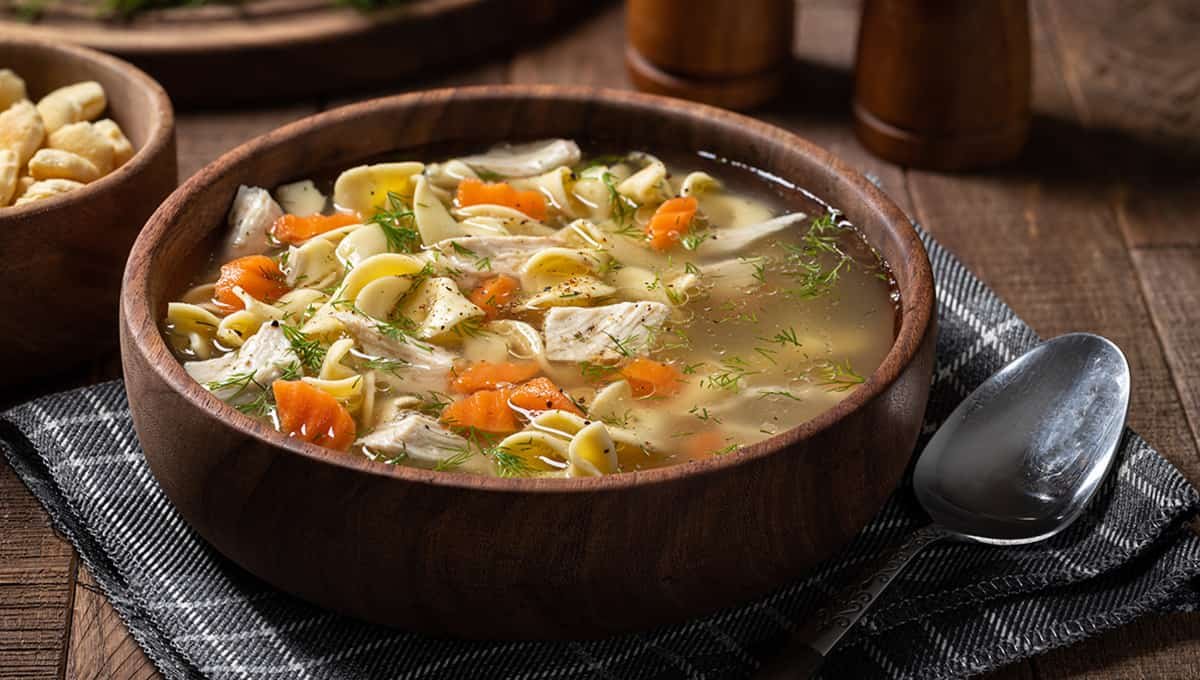
Step 1: Sauté the vegetables. Heat the olive oil in your pot over medium heat. Add the onion, carrots, and celery. Cook for about 6-7 minutes, stirring occasionally, until the onion turns soft and translucent.
Step 2: Add the garlic. Toss in the minced garlic and cook for another 30 seconds, just until it smells amazing. Don’t let it burn, it turns bitter fast.
Step 3: Add the chicken and broth. Place the raw chicken breasts right into the pot. Pour in the chicken broth, then add the bay leaves and thyme. Bring everything to a boil.
Step 4: Simmer. Once it’s boiling, drop the heat down to low and let it simmer, partially covered, for about 20-25 minutes, or until the chicken is fully cooked through.
Step 5: Shred the chicken. Pull the chicken breasts out with tongs and set them on a cutting board. Let them cool for a few minutes, then shred with two forks.
Step 6: Cook the noodles. Add the egg noodles directly into the simmering broth (or cook separately, see Pro Tip #2 above). Cook for 6-8 minutes, or until tender.
Step 7: Bring it back together. Return the shredded chicken to the pot. Season with salt and pepper to taste. Let everything warm through for a couple more minutes.
Step 8: Serve. Ladle into bowls and top with fresh chopped parsley. Grab a spoon and enjoy.
Substitutions and Variations
| Original | Swap |
|---|---|
| Egg noodles | Rice, quinoa, or gluten-free noodles |
| Chicken breasts | Chicken thighs (even more flavor) |
| Chicken broth | Bone broth for extra protein |
| Fresh thyme instead of dried | Use 1 tbsp fresh if you have it |
| Regular egg noodles | Whole wheat noodles for more fiber |
Want it keto or low-carb friendly? Skip the noodles completely and swap in cauliflower rice or spiralized zucchini noodles added in the last 5 minutes of cooking.
If you’re keeping an eye on sodium, look for a low-sodium chicken broth and season with salt yourself at the end. That way you’re in full control of exactly how much goes in.
Read this also: This 30-Minute Lentil Soup Tastes Like a Warm Hug
Cooking Time Efficiency Tips
Chop all your vegetables before you turn the stove on. It sounds obvious, but having everything prepped and ready to go means you’re not standing over a hot pot with a knife in hand trying to catch up.
You can also buy pre-shredded carrots and pre-diced celery from the grocery store if you’re really trying to save time. It costs a little more, but on a busy weeknight, that’s a trade worth making.
Another option is doubling the recipe and freezing half. Making soup takes roughly the same amount of hands-on time whether you’re making one pot or two, so you might as well stock your freezer while you’re at it.
Make Ahead Tips
You can prep the vegetables (onion, carrots, celery) up to 2 days ahead and store them chopped in the fridge. This shaves a solid 10 minutes off your cook time on a busy night.
The broth base itself (everything except the noodles) also freezes really well. Just add fresh noodles when you’re ready to reheat and serve.
Leftovers and Storage
Store the soup in an airtight container in the fridge for up to 4 days. If you added noodles directly to the pot, expect them to soften more the longer it sits, that’s normal.
To freeze, leave the noodles out and freeze just the broth, veggies, and chicken for up to 3 months. Add freshly cooked noodles when you reheat it.
Reheat on the stovetop over medium-low heat, stirring occasionally, until warmed through. You can also microwave individual bowls in 60-second bursts.
Nutritional Snapshot (per serving, approx.)
| Nutrient | Amount |
|---|---|
| Calories | 285 |
| Protein | 27g |
| Carbs | 24g |
| Fat | 8g |
| Fiber | 2g |
This is based on 6 servings and will vary depending on the exact broth and noodles you use.
Meal Pairings
This soup is pretty complete on its own, but a few things make it even better:
- Warm crusty bread or dinner rolls for dipping
- A simple side salad with vinaigrette
- Grilled cheese sandwich for dunking (Silas’s personal favorite move)
FAQs Related to Chicken Noodle Soup Recipe
1. Can I use a rotisserie chicken instead?
Yes, absolutely. Skip simmering raw chicken in the broth and instead shred a rotisserie chicken and add it in during Step 6 along with the noodles.
2. Why did my noodles turn to mush?
This usually happens because the noodles sat in the hot broth too long, either during cooking or in the fridge overnight. Cook noodles separately and add just before serving to avoid it.
3. Can I make this in a slow cooker?
Yes. Add everything except the noodles to the slow cooker and cook on low for 6-7 hours or high for 3-4 hours. Shred the chicken, then stir in cooked noodles right before serving.
4. Is chicken noodle soup actually good for a cold?
There’s real research behind this one. Warm broth helps with hydration and can temporarily ease congestion, and the combination of protein and vegetables gives your body what it needs to recover.
5. How long does homemade chicken soup last in the fridge?
About 4 days in an airtight container. After that, it’s better to freeze any leftovers instead of risking it.
6. Can I add other vegetables?
Definitely. Peas, corn, spinach, or diced potatoes all work well. Add heartier vegetables like potatoes earlier in the simmer, and softer ones like spinach or peas in the last few minutes.
7. Why does my soup taste bland even after seasoning?
This usually means it needs acid, not just salt. A squeeze of fresh lemon juice right before serving can brighten the whole pot and make all the other flavors pop.
Wrapping Up
This chicken noodle soup recipe is the kind of thing you’ll want on repeat once the weather turns cold, or honestly any time someone in your house needs a little comfort in a bowl.
Give it a try this week and let me know in the comments how it turned out. Did you make any swaps? Any tips of your own you’d add? I’d love to hear about it.