I put a spoonful of straight apple cider vinegar, horseradish, and cayenne pepper in my mouth on purpose.
That’s fire cider in one sentence. And somehow, it’s one of the most requested things in my kitchen every time cold season rolls around.
I’ll be honest, the first time a friend handed me a jar of this stuff, I thought she was pranking me. It looks like something you’d find in a witch’s pantry. Cloudy, orange-red, with chunks of ginger and garlic floating around like a science experiment gone rogue.
But once you get past the first fiery sip, something clicks. It’s warming. It’s sharp. It genuinely wakes you up better than coffee some mornings.
Side Note: Fire cider has actually been around since the 1970s, popularized by herbalist Rosemary Gladstar. There was even a whole legal battle over whether “fire cider” could be trademarked. (It can’t. It’s officially a generic term now, thanks to a group of herbalists who fought for it.)
This isn’t a magic cure for anything. But it’s packed with immune-supporting ingredients, it tastes incredible once you get used to it, and it makes a killer addition to salad dressings, marinades, and yes, the occasional shot glass.
Let’s make some.
What You’ll Need
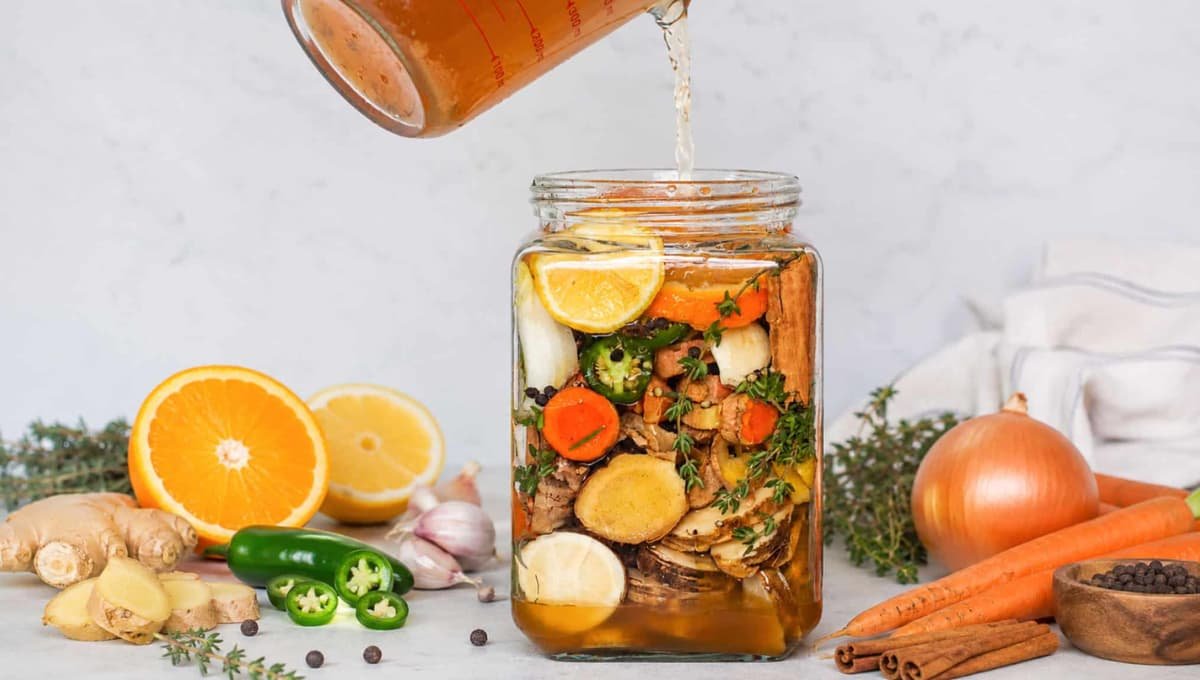
| Ingredient | Amount |
|---|---|
| Fresh ginger, peeled and chopped | 1/2 cup |
| Fresh turmeric, peeled and chopped (or 1 tbsp dried) | 1/4 cup |
| Fresh horseradish root, peeled and chopped | 1/4 cup |
| Garlic cloves, smashed | 8-10 |
| Yellow or white onion, chopped | 1/2 cup |
| Jalapeño or cayenne pepper, sliced (seeds in for more heat) | 1-2 |
| Organic lemon, sliced (with peel) | 1 |
| Organic orange, sliced (with peel) | 1 |
| Fresh rosemary sprig | 1 |
| Ground turmeric or cinnamon stick | Optional, 1 tsp or 1 stick |
| Raw, unfiltered apple cider vinegar (with the mother) | 3-4 cups, enough to cover |
| Raw honey | To taste, added after straining |
Side Note: Every ingredient here should be raw and unpeeled where possible (except onion and garlic, obviously). The whole point is preserving as many of the natural compounds as you can.
Read to also: Marry Me Meatballs: The Recipe That Got Its Name for a Reason
Tools You’ll Need
- A 32 oz mason jar (wide mouth works best)
- A cutting board and sharp knife
- A plastic or wax paper lid (metal reacts with the vinegar over time)
- Cheesecloth or a fine mesh strainer
- A funnel (optional but makes the straining step way less messy)
- A small bowl for the honey mixing step
Pro Tips
Before you dive in, a few things I wish someone had told me the first time.
- Wear gloves when handling horseradish and hot peppers. I learned this the hard way and spent twenty minutes with my hand under cold water, questioning my choices.
- Never use a metal lid directly on the jar. The vinegar will corrode it over time and you’ll end up with rust flakes in your tonic. Use plastic wrap under a metal ring, or a plastic storage lid.
- Shake the jar daily. This keeps everything infusing evenly and stops anything from settling and molding at the top.
- Don’t skip the fat content in the peel. Leaving the peels on your citrus adds a bitterness that actually balances the sweetness later. Trust the process here.
- Add honey after straining, not before. Honey can slow the extraction process if it’s in there from day one. Wait until the end.
How to Make Fire Cider
Step 1: Prep Your Ingredients
Peel and roughly chop the ginger, turmeric, and horseradish. Smash the garlic cloves with the flat side of your knife (no need to peel first, it comes off easier once smashed). Slice your onion, peppers, lemon, and orange.
Step 2: Layer Everything Into the Jar
Add all of your solid ingredients into the mason jar. Don’t stress about a perfect order here, just get everything in.
Step 3: Cover With Vinegar
Pour the apple cider vinegar over everything until it’s completely submerged, with about an inch of vinegar above the solids. This part matters. Anything poking above the liquid can mold.
Step 4: Seal and Store
Cover with your plastic lid (or plastic wrap secured with a rubber band under a metal ring). Store the jar in a cool, dark cabinet.
Step 5: Shake Daily
For the next 3 to 4 weeks, give the jar a good shake once a day. This is the hardest part because it just means waiting.
Step 6: Strain
After 3-4 weeks, strain the liquid through cheesecloth or a fine mesh strainer into a clean jar or bottle. Squeeze the cheesecloth to get every last drop out of the solids.
Step 7: Sweeten and Bottle
Stir in raw honey to taste; start with 2-3 tablespoons and adjust from there. Transfer to a clean bottle or jar with a non-metal lid.
Read this also: Homemade Italian Meatballs That Never Fall Apart (My Go-To Recipe)
Substitutions and Variations

| Original | Swap | Why It Works |
|---|---|---|
| Fresh horseradish | Wasabi paste (small amount) | Similar sharp heat if horseradish isn’t available |
| Raw honey | Maple syrup | Vegan-friendly, similar sweetness |
| Jalapeño | Habanero | For serious heat lovers |
| Fresh turmeric | Ground turmeric | Slightly less potent but works fine |
| Apple cider vinegar | Raw honey vinegar | Milder flavor, still effective |
Some people add echinacea root, rose hips, or elderberries for an extra immune-boosting punch. If you’ve got them, toss them in with the rest.
Make Ahead Tips
This is basically a make-ahead recipe by nature since it needs a full 3 to 4 weeks to properly infuse. My advice? Make a double batch. Once it’s ready, it keeps for months, so there’s no reason to make small batches over and over.
Nutritional Snapshot (per 1 oz serving)
| Nutrient | Amount |
|---|---|
| Calories | ~15-20 |
| Sugar | 3-4g (from honey) |
| Vitamin C | High (from citrus and peppers) |
| Sodium | 0mg |
Side Note: This is meant to be taken in small doses, like a shot or a splash in your dressing, not chugged by the glass. A little goes a long way, especially with the horseradish and cayenne in there.
Ways to Use It
Beyond the classic “shoot it straight and wince” method, fire cider is great:
- Whisked into salad dressings with olive oil
- Splashed into marinades for chicken or steak
- Mixed into a hot water and honey drink when you’re feeling under the weather
- Added to Bloody Marys for people who like their brunch with a kick
Leftovers and Storage
Fire cider keeps for 3 to 6 months in the refrigerator, and some people store it at room temperature in a cool, dark cabinet since the vinegar acts as a natural preservative. I keep mine in the fridge just to be safe.
If you see any mold or off smells, toss it. Otherwise, that cloudy sediment at the bottom is completely normal, just shake before using.
FAQs Related to
1. Does fire cider actually prevent colds?
There’s no scientific proof it cures or prevents illness. But the ingredients (ginger, garlic, citrus) are individually linked to immune support, so it’s a reasonable addition to a healthy routine, not a replacement for one.
2. Is it safe to drink every day?
Most people take it in small doses, like a tablespoon a day. If you have a sensitive stomach or acid reflux, start with less and see how your body responds.
3. Why is my fire cider cloudy?
That’s completely normal. It’s from the natural sediment of the ginger, turmeric, and other root vegetables. Just shake before each use.
4. Can I use bottled lemon and orange juice instead of fresh slices?
You can, but you’ll lose a lot of the flavor and beneficial compounds that come from the peel and pith. Fresh is worth it here.
5. How long does the infusion process actually need?
Three weeks is the minimum, but four weeks gives you a noticeably stronger, more developed flavor. I’ve let mine go up to six weeks before and it only got better.
Conclusion
Fire cider isn’t for everyone, and that’s honestly part of the fun of it. It’s bold, it’s a little intense, and it forces you to actually pay attention to what you’re eating for once. Once you make your first batch, I promise the smell alone will have you counting down the days until it’s ready.
Give it a try and let me know in the comments how your batch turned out, and if you added anything unexpected to your jar. I’d love to hear what worked for you.