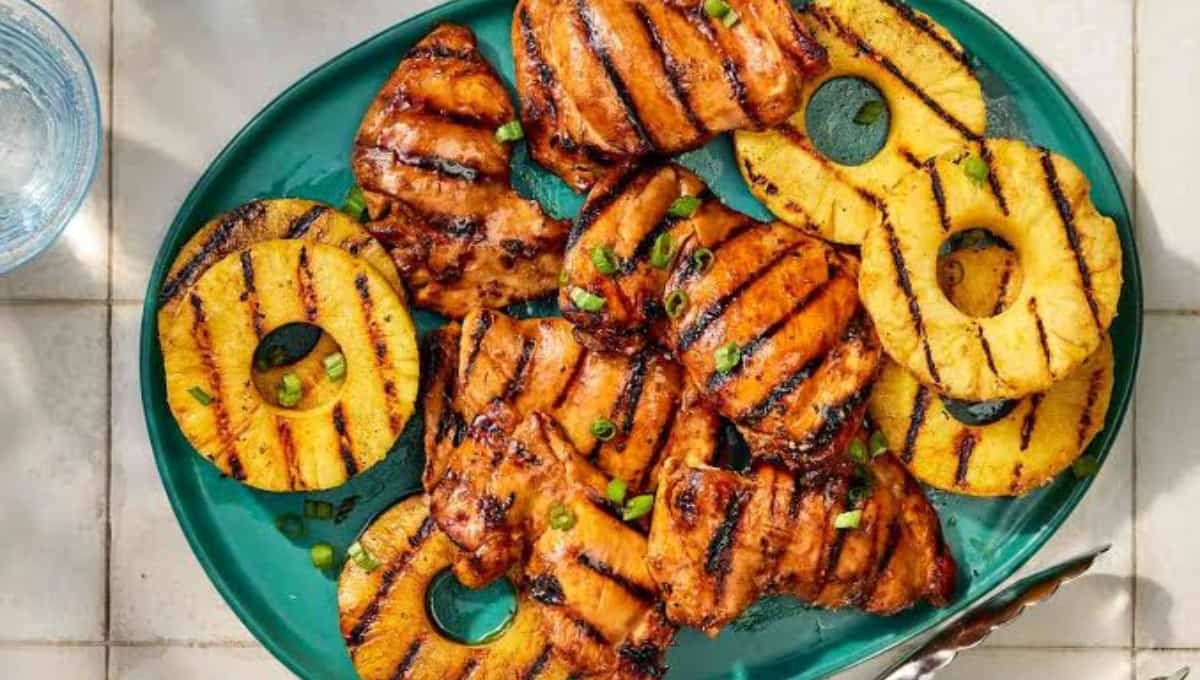
My husband Silas is not a stove hoverer. He is a “just call me when it’s done” kind of guy.
Then I pulled the first batch of huli huli chicken off the grill, and he was standing next to me with a fork before I even set the tongs down.
The skin was dark, glossy, and sticky like candy. The meat underneath was so juicy it nearly slid off the bone on its own.
And the sauce? It’s made from pantry staples you probably already own. The real secret is in the name itself, and it has nothing to do with flavor. I’ll get to that in a minute.
Side Note: I burned my first attempt. Badly. You’ll skip that mistake because I’m about to tell you exactly where it went wrong.
Why This Huli Huli Chicken Works So Well
A good recipe should earn its spot on your dinner rotation. This one does it with a few simple tricks:
- Pineapple juice adds a gentle fruity tang and helps the marinade soak in, without making the chicken taste like dessert.
- Bone-in, skin-on thighs stay juicy even if you get distracted on the patio. (I did.)
- A saved portion of the sauce turns into a thick glaze at the end, so you get that glossy finish.
- Turning the chicken often builds layer after layer of caramelized flavor.
It also makes a ton of food for very little effort. Most of the work happens while the chicken sits in the fridge.
What Is Huli Huli Chicken?
Huli huli chicken is a Hawaiian-style grilled chicken coated in a sweet and savory sauce made with soy sauce, pineapple juice, brown sugar, ginger, and garlic. The word “huli” means “turn” in Hawaiian, so the name literally means “turn turn chicken.”
Here’s the fun part. The story most people tell is that a Hawaii poultry man named Ernest Morgado popularized it in the mid 1950s. He grilled chickens in rotating baskets and kept calling out “huli huli” to the crew to flip them.
The name stuck, and so did the sauce. Today you’ll find it at roadside stands, school fundraisers, and backyard parties all over the islands.
Read this also: One Skillet, 30 Minutes: Creamy Garlic Chicken Tortellini
Quick Recipe Snapshot
| Detail | Time or Amount |
|---|---|
| Prep time | 15 minutes |
| Marinating time | 4 to 12 hours |
| Cook time | 40 to 45 minutes |
| Servings | 6 |
| Difficulty | Easy |
What You’ll Need
Nothing here is fancy. Most of it is probably sitting in your kitchen right now.
For the Chicken
| Ingredient | Amount |
|---|---|
| Bone-in, skin-on chicken thighs | 3 pounds (about 8 thighs) |
| Vegetable oil, for the grill grates | 1 tablespoon |
For the Huli Huli Sauce
| Ingredient | Amount |
|---|---|
| Pineapple juice | 1/2 cup |
| Low sodium soy sauce | 1/3 cup |
| Packed brown sugar | 1/3 cup |
| Ketchup | 1/4 cup |
| Rice vinegar | 2 tablespoons |
| Fresh ginger, finely grated | 1 tablespoon |
| Garlic cloves, minced | 4 |
| Toasted sesame oil | 1 teaspoon |
| Black pepper | 1/2 teaspoon |
For Serving
| Ingredient | Amount |
|---|---|
| Green onions, thinly sliced | 3 |
| Sesame seeds | 1 tablespoon |
| Fresh pineapple rings (optional) | 4 to 6 |
Tools You’ll Need
- Outdoor grill (gas or charcoal)
- Large zip-top bag or a shallow baking dish
- Large mixing bowl and whisk
- Small saucepan
- Grill tongs
- Silicone basting brush
- Instant-read meat thermometer
- Microplane or fine grater for the ginger
- Cutting board and sharp knife
Pro Tips From My Own Kitchen Mistakes
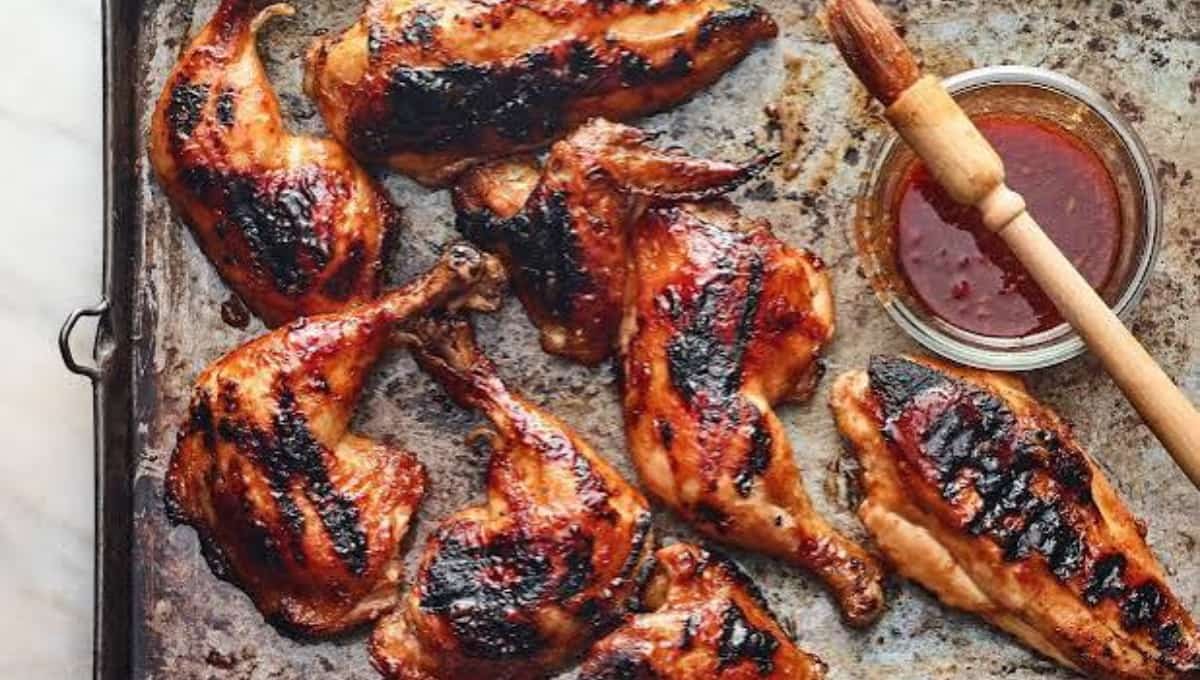
- Save the glaze before the chicken touches it. Pour about half a cup of the sauce into a separate container first. Raw chicken juices make the used marinade unsafe to brush on at the end.
- Keep the marinating time under 12 hours. Pineapple juice can turn chicken mushy if it sits too long. Four to twelve hours is the sweet spot.
- Wait to baste. Brown sugar burns fast over direct flames. Only start brushing in the last 10 minutes. This is the exact mistake I made the first time.
- Cook by temperature, not by time. Chicken is safe at 165°F, but thighs taste better and stay tender around 175°F.
- Set up two heat zones. Keep one side of the grill hot and the other side cooler. When the skin darkens too quickly, slide the chicken over to the cool side.
How to Make Huli Huli Chicken Step by Step
Grill Method
- Mix the sauce. In a large bowl, whisk the pineapple juice, soy sauce, brown sugar, ketchup, rice vinegar, ginger, garlic, sesame oil, and pepper. Keep whisking until the sugar fully dissolves.
- Set aside the glaze. Pour about 1/2 cup of the sauce into a small saucepan. Cover it and keep it in the fridge. This part never touches raw chicken.
- Marinate the chicken. Place the thighs in a zip-top bag and pour in the rest of the sauce. Squeeze out the air, seal it, and chill for 4 to 12 hours. Flip the bag once if you remember.
- Heat the grill. Aim for medium heat, around 375°F, with one hot side and one cooler side. Brush the grates with oil.
- Drain the chicken. Lift the thighs out and let the extra marinade drip off. Toss the used marinade.
- Sear the skin. Lay the thighs skin side down over the hot side for about 5 minutes. Flip them once, then move them to the cooler side.
- Turn often. Close the lid. Every 8 to 10 minutes, flip the chicken. That’s the “huli huli” part, and it keeps the skin from scorching.
- Thicken the glaze. While the chicken cooks, simmer the saved sauce for 6 to 8 minutes until it looks syrupy. It will thicken more as it cools.
- Brush and finish. About 10 minutes before the chicken is done, start brushing on the glaze every few minutes. Cook until the thickest part hits 175°F, about 40 to 45 minutes total.
- Rest and garnish. Let the chicken sit for 5 to 10 minutes. Top with green onions and sesame seeds.
If you’re adding pineapple, grill the rings for 2 to 3 minutes per side during the final stretch. They pick up smoky char and soak up a little glaze.
Read this also: Tender Beef and Broccoli: The Pantry Trick Takeout Uses
Oven Method
No grill? No problem. Heat the oven to 425°F and set a wire rack on a foil-lined baking sheet.
Place the drained thighs skin side up on the rack. Bake for 30 minutes, then brush with glaze and bake 10 to 15 minutes more, until they reach 175°F.
Finish with 2 to 3 minutes under the broiler to get those dark, sticky edges. Stay close, because broilers are sneaky.
Substitutions and Variations
| Swap | How It Works |
|---|---|
| Chicken drumsticks | Same cook time, and kids love them. |
| Boneless chicken breasts | Marinate only 2 to 4 hours. Grill 6 to 7 minutes per side until 165°F. |
| Gluten-free option | Use tamari instead of soy sauce. |
| Lower sugar | Cut the brown sugar to 3 tablespoons. The sauce will be less sticky but still tasty. |
| Spicy version | Add 1 tablespoon sriracha or 1/2 teaspoon red pepper flakes. |
| No fresh ginger | Use 1/2 teaspoon ground ginger. |
| No rice vinegar | Use apple cider vinegar. |
| Air fryer | Cook at 380°F for 20 to 25 minutes, flipping halfway, and glaze at the end. |
Make Ahead Tips
This is a great recipe for busy weeks, since the sauce can be made up to 3 days ahead and kept in a jar in the fridge.
You can also marinate the chicken in the morning and grill it after work. Dinner feels like it took hours, but your actual effort was maybe 20 minutes.
For a crowd, freeze the raw chicken in the marinade bag. Thaw it overnight in the fridge, and it will marinate while it defrosts.
Leftovers and Storage
- Fridge: Store cooked chicken in an airtight container for up to 4 days.
- Freezer: Freeze for up to 3 months. Wrap tightly so the skin doesn’t dry out.
- Reheating: Warm it in a 350°F oven for 15 to 20 minutes, covered loosely with foil. A quick brush of fresh glaze brings the shine back.
Side Note: Leftover chicken shredded off the bone is amazing in rice bowls, tacos, and sandwiches. I often cook extra just for that.
Nutrition Snapshot
These are rough estimates for one serving, which is about one and a third thighs with glaze. Exact numbers change depending on your brands and thigh size.
| Nutrient | Approximate Amount |
|---|---|
| Calories | 350 to 400 |
| Protein | 25 to 30 grams |
| Carbohydrates | 18 to 20 grams |
| Sodium | Moderate to high, mostly from soy sauce |
Pulling off the skin before eating cuts the fat quite a bit. Low sodium soy sauce also helps keep the salt in check.
What to Serve With Huli Huli Chicken
- Steamed white rice or coconut rice to catch every drop of sauce
- Hawaiian mac salad for the classic plate lunch feel
- Crunchy cabbage slaw with a light vinegar dressing
- Grilled pineapple and corn on the cob
- Sweet Hawaiian rolls for little chicken sandwiches
FAQs Related to Huli Huli Chicken
1. What does huli huli mean?
It means “turn turn” in Hawaiian. The name comes from the habit of flipping the chicken often while it grills.
2. How long should I marinate huli huli chicken?
Marinate for 4 to 12 hours. Under 4 hours the flavor stays on the surface, and over 12 hours the texture can turn soft because of the pineapple juice.
3. Can I use chicken breast instead of thighs?
Yes, but breasts dry out faster. Marinate for a shorter time, cook to 165°F, and rest the meat before slicing.
4. What temperature should huli huli chicken reach?
The safe minimum is 165°F. For juicier, more tender thighs, I take them to about 175°F.
5. Why save part of the marinade?
Marinade that touched raw chicken carries bacteria. The saved portion is clean, so you can simmer it into a glaze and brush it on safely.
6. Can I cook huli huli chicken without a grill?
Absolutely. The oven method above works well, and an air fryer is a fast option for smaller batches.
7. Is huli huli chicken spicy?
No. It’s sweet, tangy, and savory. Add sriracha if you want heat.
Conclusion
This chicken is one of those recipes that makes a regular Tuesday feel like a small celebration. It’s sticky, smoky, juicy, and honestly pretty hard to mess up once you know about the burning sugar trap.
Make it this weekend, and put the extras in a rice bowl on Monday. Your future self will be thrilled.
If you try it, leave a comment and tell me how it went. Did you grill it or bake it? Did anyone fight over the last thigh? And if you have any questions, drop them below and I’ll help you out.